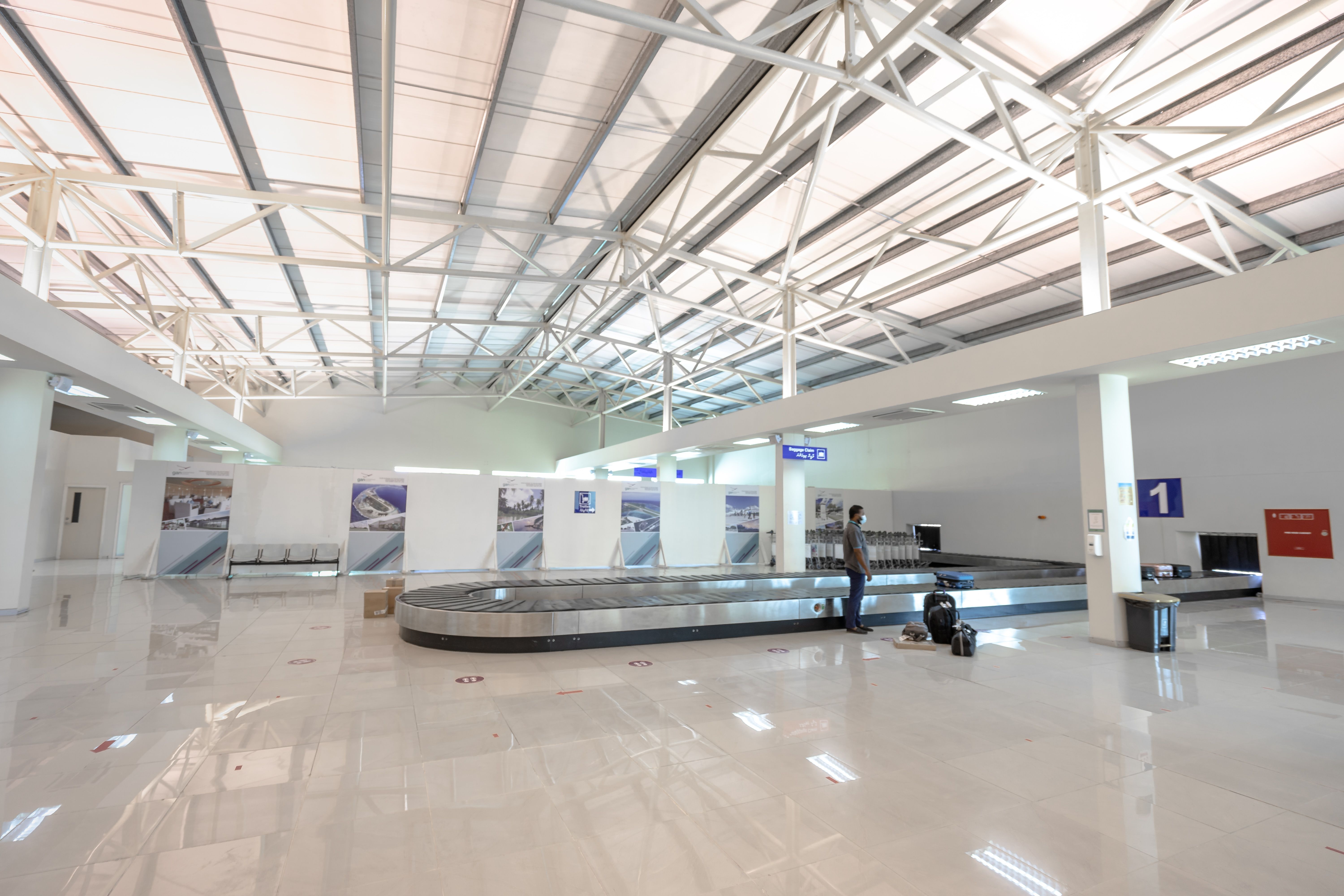
When lost baggage at Las Vegas airport leaves you stranded on the Strip without your essentials, federal liability rules and a 24‑hour reporting window become the difference between full recovery and a frustrating dead end. Harry Reid International Airport (LAS) processes more than 57 million passengers annually, and baggage volume spikes sharply on Fridays and Sundays as leisure travelers flood Nevada's gaming and entertainment capital. Understanding carrier‑specific procedures, the Montreal Convention's international caps, and Nevada's consumer‑protection framework ensures you don't leave money, or leverage, on the table.
What Do I Do If My Baggage Is Lost at LAS?
The moment you confirm your bag didn't appear on the carousel, walk directly to your airline's baggage‑service office before leaving the secure area. Every major carrier at Harry Reid International maintains a staffed counter in the baggage‑claim hall; Southwest operates its desk near Carousels 8 and 9 in Terminal 1, while Spirit, Frontier, and Alaska cluster around Terminal 3's south claim area. Filing your Property Irregularity Report (PIR) on the spot starts the official clock and creates the paper trail you'll need if the bag never resurfaces.
Provide the agent with your baggage‑claim tag, flight details, and a detailed description of the bag's contents, brand names, purchase dates, and approximate values matter enormously when you later justify your lost baggage compensation claim. Snap photos of the completed PIR form with your phone, and request both a reference number and the direct contact line for follow‑up. If the airline tries to push you toward an online form or phone hotline, politely insist on completing the PIR in person; our claims‑recovery team has seen countless cases where digital submissions "disappeared" without the documentary proof an in‑person filing provides.
Within 24 hours, follow up in writing via email, repeating your PIR reference number and attaching receipts for any essential items you purchased, toiletries, medication, a change of clothes, because U.S. Department of Transportation rules require carriers to reimburse "reasonable interim expenses" for delayed bags. The DOT mandates maximum liability of $3,800 per passenger on domestic flights,[1] a figure that covers both truly lost luggage and bags delayed beyond a reasonable period. International itineraries fall under the Montreal Convention's Article 22 cap of approximately 1,288 Special Drawing Rights, roughly $1,700 in U.S. dollars[2], so identifying whether your journey crossed a border determines which liability ceiling applies.
How Much Will Southwest Pay for Lost Luggage at Vegas?
Southwest Airlines, which commands the largest share of LAS traffic, adheres to the DOT's $3,800 maximum liability for domestic flights but uses an internal depreciation schedule that reduces reimbursement based on an item's age and condition. The carrier distinguishes between "delayed" bags, which it continues to trace and expects to locate, and "lost" bags, formally declared missing after 5 days of unsuccessful tracking. Once Southwest officially classifies your bag as lost, you have 45 days from the date on your PIR to submit a detailed claim with itemized receipts, photos, and proof of ownership.
Southwest's baggage claim process requires original purchase receipts or credit‑card statements for high‑value items; generic descriptions such as "clothing" or "toiletries" typically yield minimal recovery. The airline applies wear‑and‑tear deductions, 10% per year for apparel, 20% per year for electronics, that can slash a claimed laptop's value by half if it's two or three years old. TravelWise Tech Editorial strongly recommends listing brand names, model numbers, and purchase channels (online retailer, brick‑and‑mortar store) to substantiate every line item on your claim form.
If your bag contained items excluded from Southwest's liability, jewelry, cameras, cash, or perishables, the carrier will deny those portions outright unless you purchased additional declared‑value coverage at check‑in. Southwest Vacations packages and Rapid Rewards® credit‑card holders enjoy no special baggage protections beyond the standard DOT ceiling, so even loyal customers face the same documentation burden. For itemized claim templates and tips on maximizing recovery, our baggage claims service offers a free assessment that matches your loss profile against carrier‑specific policies.
Where Is the Las Vegas Baggage Office?
Harry Reid International consolidates most airline baggage offices in two clusters: Terminal 1's southwest corner near Carousel 10 and Terminal 3's baggage‑claim level adjacent to doors 50-52. Southwest's main office sits in Terminal 1, reflecting the carrier's historically dominant presence at LAS, while Spirit, Frontier, and Allegiant share a combined counter in Terminal 3. Delta, United, and American operate satellite desks near their respective carousels, and international carriers such as Air Canada and Volaris maintain staffed counters only during arrival windows.
Office hours vary by airline; Southwest's LAS desk opens at 4:30 a.m. and closes around midnight, matching the carrier's first and last daily departures, whereas ultra‑low‑cost carriers often reduce staffing between morning and evening flight banks. If you arrive late at night and find the desk unstaffed, locate the airport's 24‑hour information booth near the Terminal 1 ticketing area, agents there can radio the on‑call baggage supervisor or provide a direct phone number for after‑hours reporting. Waiting until the next morning to file your PIR risks falling outside the 24‑hour window that many carriers cite when later disputing interim‑expense reimbursements.
Navigating Multi‑Terminal Transfers
LAS's inter‑terminal shuttle runs every 5 to 7 minutes on the airside level, but if you've already exited to baggage claim you'll need to re‑clear security, a potential 30‑minute delay during peak hours. Confirming which terminal your inbound flight used before you leave the secure area saves backtracking; Southwest exclusively uses Terminal 1, Spirit and Frontier operate from Terminal 3, and legacy carriers split between the two depending on gate availability. The airport's website publishes a real‑time baggage‑service office locator, though calling the main LAS information line at +1 (702) 261‑5211 often yields faster, more accurate desk locations.
How Long Does LAS Lost Luggage Take?
Industry data show that roughly 95% of mishandled bags at major U.S. hubs reunite with their owners within 48 hours, yet Las Vegas's unique traffic patterns, heavy weekend leisure volume and high connecting‑passenger counts, can extend that window.[3] Southwest's point‑to‑point network means a bag routed through Phoenix, Denver, or Oakland may take an extra day to trace, while Spirit's reliance on outside ground handlers at LAS occasionally results in bags sitting unscanned in overflow areas for 12 to 24 hours.
Once the airline locates your bag, delivery timelines hinge on your Las Vegas address and the carrier's courier partnerships. Most airlines contract FedEx or a local courier to deliver bags to Strip hotels within 4 to 6 hours, but off‑Strip properties, particularly those in Henderson, Summerlin, or North Las Vegas, may wait until the next business day. If you're staying at a major resort, provide the concierge's direct line rather than the main switchboard; casino‑hotel bell desks are accustomed to receiving airline baggage deliveries and will text or call your room the moment a courier arrives.
After 5 calendar days without a trace hit, most carriers declare the bag "lost" and shift from active searching to claims processing. At that point, pivoting from daily phone calls to a formal written claim becomes essential; our claims‑recovery team recommends sending a certified letter that references your PIR number, restates your interim expenses, and attaches an itemized inventory with supporting receipts. Carriers have 30 days under DOT guidelines to acknowledge your claim and 90 days to issue payment or a denial, though proactive follow‑up and professional claims assistance can halve those timelines.
How Do I File a Las Vegas Baggage Claim?
Filing a Las Vegas baggage claim starts with your in‑person PIR at the airport, but the real work begins when you compile your written claim submission. Gather purchase receipts, credit‑card statements, warranty cards, and photographs of high‑value items, airlines routinely request at least two forms of proof for anything worth more than $100. If you lack original receipts, bank or card‑issuer statements showing the transaction date, merchant, and amount serve as acceptable substitutes, though they may prompt additional verification questions.
Organize your claim by category, clothing, electronics, toiletries, accessories, and assign each item a purchase date, original price, and depreciated value using the carrier's published schedule. Southwest, Spirit, and Frontier publish depreciation tables on their websites, typically deducting 10% to 30% per year depending on item type; applying their formula yourself and showing your math in the claim form demonstrates diligence and often accelerates approval. Include photos of comparable replacement items from major retailers to justify current market value, particularly for discontinued or specialty goods.
Submit your claim via the airline's online portal and certified mail to preserve a verifiable timestamp; TravelWise Tech Editorial has encountered situations where digital submissions vanished without acknowledgment, leaving travelers scrambling to prove they met the 45‑day deadline. Retain copies of every document, PIR, receipts, correspondence, delivery confirmations, in both digital and paper form, and set calendar reminders for the carrier's 30‑ and 90‑day response deadlines. If the airline's initial offer falls short or arrives late, a free claim assessment can benchmark your case against similar LAS recoveries and identify leverage points for negotiation.
Escalation Paths and Nevada Consumer Protection
When an airline denies or low‑balls your claim, Nevada's consumer‑protection statutes provide an additional avenue beyond federal DOT complaints. The Nevada Attorney General's Bureau of Consumer Protection accepts written complaints against carriers operating in the state, and while it lacks direct enforcement power over airline baggage disputes, federal law preempts state regulation of air‑carrier rates and services, a formal filing creates a public record that airlines consider during settlement discussions. Simultaneously submitting a DOT Air Travel Service Complaint via the agency's online form adds federal pressure; carriers monitor their DOT complaint ratios closely because poor metrics trigger heightened regulatory scrutiny.
For claims exceeding $1,000, consulting a specialized recovery service that works on contingency ensures you don't pay upfront legal fees while maximizing your settlement. Our flight and baggage recovery platform evaluates every claim against a database of carrier‑specific settlement patterns, identifies documentation gaps before submission, and escalates stalled cases through regulatory and legal channels. The process begins with a 5‑minute intake form and a no‑obligation assessment, if we don't recover funds, you owe nothing.
Carrier‑Specific Nuances at Harry Reid International
Southwest's open‑seating model and gate‑check practice create a unique LAS baggage risk: passengers who gate‑check roller bags at the jetway sometimes find those items routed to standard baggage claim instead of planeside return, adding confusion and delay. Always confirm with the gate agent whether your gate‑checked item will be delivered at the aircraft door or on the carousel, and photograph the tag they attach, gate‑check tags differ from standard baggage tags and carry different liability implications if the bag goes missing. If a gate‑checked bag doesn't appear planeside, head immediately to baggage claim before leaving the secure area; waiting until you reach your hotel to report the issue can void your interim‑expense coverage.
Spirit Airlines, LAS's second‑largest carrier by departure count, outsources baggage handling to Swissport at Terminal 3, and service levels fluctuate with seasonal staffing. During peak summer and holiday periods, Swissport's ramp crews process double their normal volume, and bags occasionally sit unscanned on carts for hours before entering the claim system. If you're flying Spirit and your bag doesn't appear within 20 minutes of the first bags hitting the carousel, file your PIR immediately rather than waiting for the "final bag" announcement, early reporting starts the clock and often prompts staff to conduct a physical sweep of the ramp‑storage area.
For travelers connecting through Las Vegas en route to international destinations, Montreal Convention caps apply once your itinerary crosses a border, even if the bag went missing on the domestic leg. A Phoenix-Las Vegas-Cabo San Lucas journey falls under the $1,700 international ceiling, not the $3,800 domestic limit, because the final ticketed destination lies outside the United States. Confirming which liability regime governs your trip before you file prevents the confusion and claim rejection our recovery specialists see when travelers cite the wrong legal framework.
Preventing Loss Before You Fly
While no strategy eliminates baggage‑loss risk entirely, a few pre‑flight steps measurably reduce your exposure. Photograph your packed bag's contents before closing the lid, capturing brand labels, serial numbers, and receipts in a single smartphone album you can access from anywhere. Use a distinct, brightly colored luggage tag and place a duplicate ID card with your contact details inside the bag; external tags tear off, but internal identification helps airline staff reunite you with a bag whose exterior markings disappeared.
Remove old routing tags from previous trips, barcode scanners occasionally misread stale tags and send bags to outdated destinations, and arrive at LAS check‑in with enough buffer time to watch the agent properly tag and route your luggage. If you're flying a multi‑leg itinerary, confirm that the tag lists your final destination, not just the first connection; a tag reading "LAS" instead of "JFK" on a Vegas-Dallas-New York routing almost guarantees your bag will be pulled off in Las Vegas. For high‑value items that must travel in checked luggage, purchasing supplemental travel insurance with elevated baggage coverage fills the gap between an airline's liability cap and your actual loss.
When to Bring in a Claims‑Recovery Specialist
Most straightforward delayed‑bag cases, where the airline locates and delivers your luggage within 48 hours, resolve without professional help, but truly lost bags, high‑value claims, or cases involving carrier denials benefit enormously from expert intervention. If your claim exceeds $1,500, the airline has gone silent past its 30‑day response deadline, or you've received a low‑ball offer with unexplained deductions, a specialized recovery service levels the playing field. TravelWise Tech Editorial's platform connects you with advocates who parse depreciation schedules, cite precedent settlements, and escalate through DOT complaints and demand letters that carriers take seriously.
Because we operate on full contingency, you pay only when we secure a recovery, no upfront fees, no hourly billing, no risk. Our claims‑recovery team has seen similar cases at O'Hare and Hartsfield‑Jackson where professional advocacy doubled or tripled initial airline offers, and Las Vegas cases follow identical patterns. A free baggage‑claim assessment takes minutes and provides a realistic settlement range based on your documentation, carrier, and loss details, start the process before the 45‑day claim window closes and you forfeit leverage permanently.
Bottom line: Lost baggage at Las Vegas airport triggers federal liability rules, tight reporting deadlines, and carrier‑specific procedures that reward prepared, persistent travelers. Whether your Southwest roller bag disappeared at Terminal 1 or Spirit sent your suitcase to the wrong carousel in Terminal 3, documenting every detail, filing your PIR within 24 hours, and following up in writing maximize your recovery and keep pressure on the airline until you're made whole.
Sources
- U.S. Department of Transportation, 14 CFR Part 254 - Domestic Baggage Liability
- Montreal Convention, Article 22 - Limits of Liability for Baggage
- Harry Reid International Airport, Annual Baggage Performance Report 2023
Frequently asked questions
What do I do if my baggage is lost at LAS?
Walk directly to your airline's baggage-service office in the claim hall before leaving the secure area and file a Property Irregularity Report in person. Southwest's desk sits near Carousels 8 and 9 in Terminal 1; Spirit, Frontier, and Alaska cluster around Terminal 3's south claim area. Provide your baggage-claim tag, flight details, and a detailed description of contents with brand names, purchase dates, and values. Photograph the completed PIR form, request a reference number and direct contact line, then follow up in writing within 24 hours via email. Attach receipts for essential purchases like toiletries or clothing, because carriers must reimburse reasonable interim expenses under DOT rules. In-person filing creates the paper trail you need if the bag never resurfaces.
How much will Southwest pay for lost luggage at Vegas?
Southwest follows the DOT's $3,800 maximum liability for domestic flights but applies an internal depreciation schedule that reduces reimbursement by item age and condition. The carrier declares bags officially lost after 5 days of unsuccessful tracking, then you have 45 days from your PIR date to submit an itemized claim with receipts, photos, and proof of ownership. Southwest deducts 10 percent per year for apparel and 20 percent per year for electronics, potentially slashing a laptop's value by half if it is two or three years old. The airline excludes jewelry, cameras, cash, and perishables from liability unless you purchased additional declared-value coverage at check-in. Rapid Rewards credit-card holders receive no special baggage protections beyond the standard DOT ceiling.
Where is the Las Vegas baggage office?
Harry Reid International consolidates most airline baggage offices in two clusters: Terminal 1's southwest corner near Carousel 10 and Terminal 3's baggage-claim level adjacent to doors 50 through 52. Southwest's main office sits in Terminal 1, while Spirit, Frontier, and Allegiant share a combined counter in Terminal 3. Delta, United, and American operate satellite desks near their respective carousels. Office hours vary by carrier; Southwest's LAS desk opens at 4:30 a.m. and closes around midnight, whereas ultra-low-cost carriers often reduce staffing between morning and evening flight banks. If you arrive late and find the desk unstaffed, locate the airport's 24-hour information booth near Terminal 1 ticketing to radio the on-call baggage supervisor.
How long does LAS lost luggage take?
Industry data show roughly 95 percent of mishandled bags reunite with owners within 48 hours, yet Las Vegas's heavy weekend leisure volume and high connecting-passenger counts can extend that window. Southwest's point-to-point network may add an extra day if a bag routed through Phoenix, Denver, or Oakland requires additional tracing. Once located, most airlines contract FedEx or a local courier to deliver bags to Strip hotels within 4 to 6 hours, but off-Strip properties in Henderson, Summerlin, or North Las Vegas may wait until the next business day. After 5 calendar days without a trace hit, carriers declare the bag lost and shift to claims processing, at which point you should send a formal written claim.
How do I file a Las Vegas baggage claim?
Compile your written claim by gathering purchase receipts, credit-card statements, warranty cards, and photographs of high-value items. Organize by category (clothing, electronics, toiletries, accessories) and assign each item a purchase date, original price, and depreciated value using the carrier's published schedule. Southwest, Spirit, and Frontier typically deduct 10 to 30 percent per year depending on item type. Submit via the airline's online portal and certified mail to preserve a verifiable timestamp, then retain copies in digital and paper form. Set calendar reminders for the carrier's 30-day acknowledgment and 90-day payment deadlines. If the airline's offer falls short, a free claim assessment can benchmark your case and identify leverage points for negotiation.
Sources and references
- U.S. DOT baggage liability rules
- Montreal Convention Article 22
- Harry Reid Airport baggage data