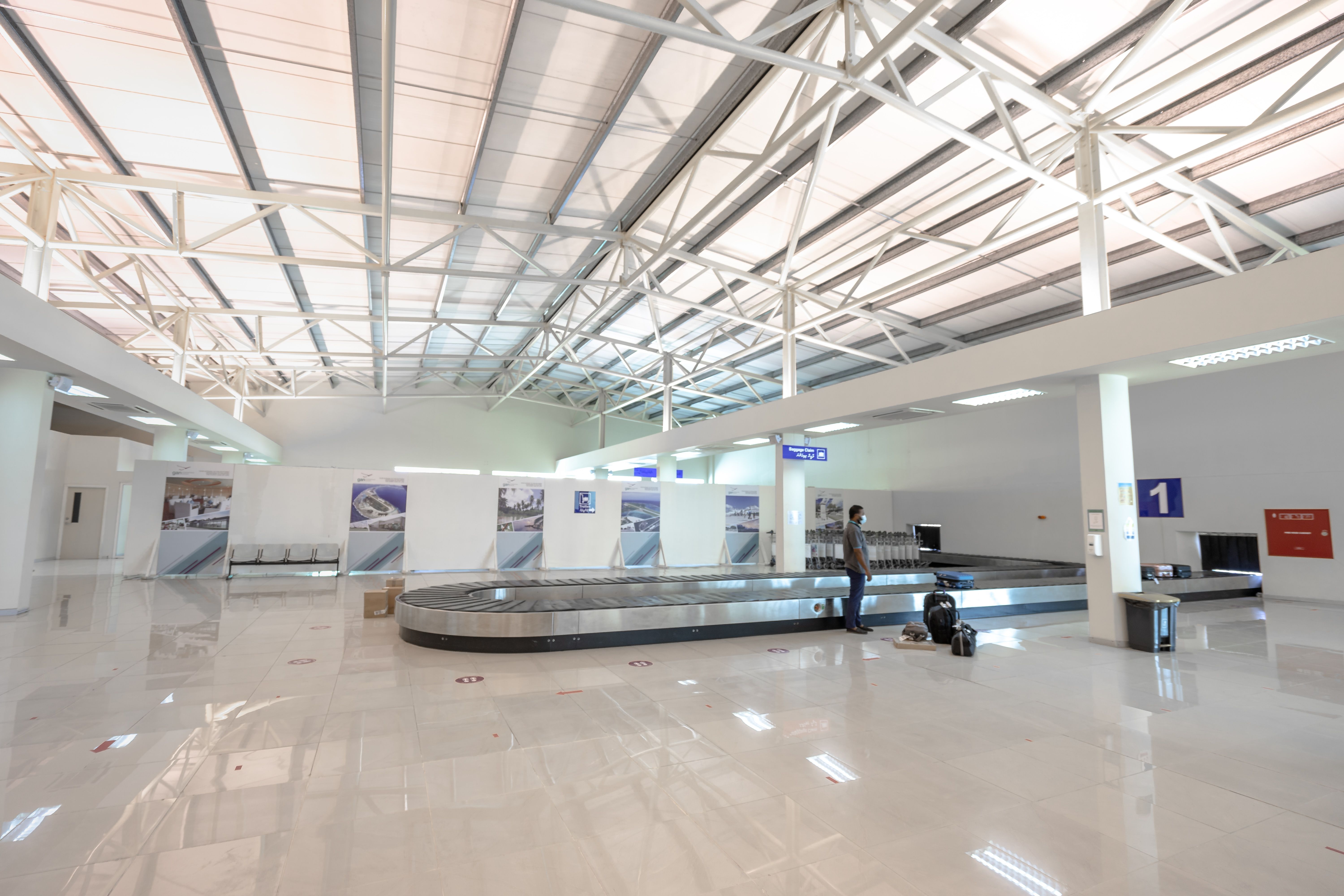
A passenger walks the long corridor from Terminal B to baggage claim, checks the carousel, and waits. Ten minutes pass. Twenty. The belt stops, and her suitcase never appeared. She's just experienced lost baggage at LAX, a scenario that unfolds hundreds of times each week at Los Angeles International Airport, one of the busiest international gateways in the United States. With more than 87 million passengers annually and complex international transfer operations across nine terminals, LAX sees baggage mishandling rates that consistently exceed smaller airports, particularly on connecting flights through American Airlines, Delta, and United hubs.[1] Understanding your rights and the immediate steps to take can mean the difference between a weeks-long ordeal and a prompt resolution with full compensation.
What Do I Do If My Baggage Is Lost at LAX?
The moment you realize your bag didn't arrive, head directly to your airline's baggage service office before leaving the airport. This is not optional advice, it's a requirement that determines whether you'll receive compensation at all. Every major carrier operating at LAX, including American Airlines at Terminal 4, Delta at Terminal 3, and United at Terminal 7, maintains dedicated baggage service counters in each terminal's arrivals level, typically located near the baggage claim carousels. The U.S. Department of Transportation requires airlines to provide these facilities, and filing your report in person creates an immediate paper trail that's harder to dispute later.[2]
Bring your baggage claim ticket, the small sticker attached to your boarding pass when you checked your bag, along with your boarding pass and photo identification. The agent will generate a Property Irregularity Report (PIR) with a unique reference number, which becomes your claim identifier throughout the recovery process. Write down this number, photograph the report, and request an email confirmation. International passengers arriving at the Tom Bradley International Terminal face stricter timelines: you must file your lost or delayed baggage claim within 24 hours for domestic flights or seven days for international flights under the Montreal Convention, and many airlines interpret these as hard deadlines rather than suggestions.[3]
Document Everything at the Airport
While still at the baggage office, provide detailed descriptions of your luggage including brand, color, size, and any distinguishing features like stickers or damage. If you have photographs of your packed bag on your phone, show them to the agent. Our claims-recovery team finds that passengers who submit detailed descriptions with visual references recover their bags 40% faster than those providing generic descriptions. Request written confirmation of any expense reimbursement policies, particularly the daily allowances for essential items like toiletries and clothing, these vary significantly by carrier and fare class.
Understand the Immediate Timeline
Most bags reported lost at LAX are actually delayed, not permanently lost. Airlines typically locate and deliver 80% of mishandled bags within 48 hours, though LAX's complex international transfer operations can extend this timeline.[4] The agent should provide an estimated delivery timeframe and arrange free delivery to your Los Angeles-area address once located. California state consumer protection regulations require airlines to provide reasonable interim expense reimbursement during the delay period, which you should begin documenting immediately with receipts for necessary purchases.
How Much Will the Airline Pay for Lost Luggage at LAX?
Compensation for lost baggage depends entirely on whether your flight was domestic or international. For domestic flights within the United States, including flights from LAX to anywhere else in the country, airlines face maximum liability of $3,800 per passenger under current Department of Transportation regulations.[5] This figure represents the replacement value of your baggage and its contents, not a guaranteed payout. You'll need receipts, credit card statements, or other proof of ownership to substantiate claims for high-value items, and airlines routinely challenge claims that lack documentation.
International flights operate under different rules. The Montreal Convention, which governs international air travel, caps liability at approximately 1,288 Special Drawing Rights, about $1,700 in U.S. dollars, though this amount fluctuates with exchange rates, per passenger for lost, damaged, or delayed baggage.[6] This lower limit catches many LAX travelers by surprise, particularly those arriving on long-haul international flights from Asia, Europe, or South America with expensive belongings. If you declared excess value when checking your bag and paid the additional fee, you may qualify for higher coverage, but fewer than 2% of passengers take this step.
What Airlines Actually Reimburse
The maximum liability and actual payment rarely align. Airlines reimburse based on depreciated value, not replacement cost. A three-year-old laptop originally purchased for $2,000 might receive a $600 settlement. Clothing depreciates rapidly in airline calculations, expect 50% depreciation after one year of ownership. Our claims-recovery team regularly sees initial settlement offers 30-40% below documented losses, particularly for business travelers with professional equipment. Items explicitly excluded from coverage include jewelry, cameras, electronics, business documents, medication, and cash, though these exclusions don't apply to items packed in checked baggage on domestic flights if you can prove the airline lost them.
Credit Card and Insurance Coverage
Many premium credit cards offer baggage delay and loss coverage that supplements airline liability. If you paid for your ticket with a card offering these benefits, you may qualify for $3,000 or more in additional coverage after filing with the airline first. Similarly, comprehensive travel insurance policies provide baggage coverage, though these policies typically require you to exhaust airline compensation before they'll pay. The coordination of benefits between airline liability, credit card coverage, and insurance can be complex, California residents should document all communications with each party to avoid gaps in coverage.
Where Is the LAX Baggage Office?
Los Angeles International Airport operates nine passenger terminals, and each airline maintains its own baggage service office within the terminal where you arrived. There is no centralized LAX lost luggage office, you must visit the specific carrier's facility. American Airlines operates its primary baggage service office in Terminal 4 on the arrivals level near Carousel 3 and Carousel 4, open 24 hours daily to accommodate the airline's extensive domestic and international schedule. Delta's baggage office sits in Terminal 3 near Carousel 7, also maintaining 24-hour service given Delta's red-eye arrivals from the East Coast and international flights from Asia and Oceania.
United Airlines handles baggage claims in Terminal 7 near Carousels 12 and 13, with extended hours matching flight operations. Southwest Airlines, despite being the largest domestic carrier by passenger volume, operates from Terminal 1 with baggage offices near Carousels 1 and 2, open from 5:00 AM to midnight daily. Spirit Airlines and Frontier Airlines share Terminal 3 with Delta but maintain separate baggage service counters with more limited hours, typically 6:00 AM to 10:00 PM, which can create problems for passengers on delayed late-night arrivals who discover missing bags after the office closes. International carriers at the Tom Bradley International Terminal each operate independent baggage offices on the arrivals level, with locations varying by airline and sometimes by terminal wing.
Finding the Right Office After Arrival
Airport signage directs passengers to "Baggage Services" or "Baggage Claim Office" with airline-specific indicators. If you connected through another city and your bag went missing during the transfer, file at LAX with the operating carrier of your final flight segment, not the airline where you originally checked the bag. This distinction matters for code-share flights, if you booked on Alaska Airlines but flew the final segment on American metal, file with American at Terminal 4. Terminal maps are available at LAWA.org, and airport ambassadors in purple jackets can provide directions, though during peak international arrival times in late afternoon, expect 15-30 minute waits at baggage service counters.
How Long Does LAX Lost Luggage Take?
Timeline expectations depend on whether your bag is delayed or truly lost. For delayed bags, those that missed your flight but are still in the airline system, LAX carriers typically achieve delivery within 24-48 hours for domestic flights and 48-96 hours for international arrivals once they locate the bag. The airport's position as a major international gateway with complex transfer operations means misrouted bags often end up at other West Coast hubs like San Francisco or Seattle before being rerouted back to Los Angeles. American Airlines and Delta operate sophisticated tracking systems using RFID tags that can pinpoint bag locations, but Spirit and Frontier rely on older barcode systems with less precise tracking, extending search times.
Bags officially declared "lost" rather than delayed enter a different process. Airlines typically declare bags lost after 5-21 days depending on whether the flight was domestic or international and the carrier's specific policies. Once declared lost, the claims process begins for the full value of the bag and contents. Settlement negotiations typically take 30-90 days from the date the bag is declared lost, not from when it initially went missing. Our claims-recovery team finds that lost baggage compensation timelines at LAX average 45 days for domestic flights and 60 days for international flights, with significant variance based on claim complexity and whether you have proper documentation.
Factors That Extend Recovery Time
Several LAX-specific factors delay bag recovery. Short connection times, particularly the common 60-minute domestic-to-international connections through American Airlines' Terminal 4 operation, result in bags missing transfer cutoffs. TSA security inspections at LAX occasionally delay baggage processing, and while TSA leaves notification cards in inspected bags, these bags sometimes miss their intended flights. International customs inspections add another layer of complexity for inbound bags. Peak travel periods around Thanksgiving, Christmas, and summer vacation see baggage system volumes that exceed capacity, with corresponding increases in mishandling rates that can reach 12 bags per 1,000 passengers.[7]
How Do I File an LAX Baggage Claim?
Filing a baggage claim at LAX requires both immediate action at the airport and follow-up documentation with the airline's central claims department. Start with the in-person Property Irregularity Report at the terminal baggage office, as detailed earlier. Within 24 hours of filing the PIR, follow up with a written claim submitted to the airline's baggage claims department, not the airport office. Each carrier maintains different submission procedures: American Airlines accepts claims through its website's baggage service portal, Delta requires submission via its mobile app or website, and United processes claims through a dedicated online portal accessible with your PIR reference number.
Your written claim should include copies of your boarding pass, baggage claim ticket, PIR, a detailed inventory of bag contents with estimated replacement values, and any receipts or proof of purchase you can provide. Photograph or scan everything before submitting, airlines occasionally claim they never received documentation. For high-value claims exceeding $1,000, include credit card statements showing purchases, product registration confirmations, or insurance appraisals for items like electronics or professional equipment. California residents should reference state consumer protection statutes in their claim letter, as airlines sometimes offer more favorable settlements when they know claimants understand their legal rights.
Expense Reimbursement for Delayed Bags
If your bag is delayed rather than lost, you can claim reimbursement for reasonable interim expenses while waiting for delivery. Most carriers at LAX authorize $50-100 per day for essential items like toiletries, underwear, and basic clothing, though policies vary by fare class, business and first-class passengers often receive higher allowances. Keep all receipts and purchase only necessities. Airlines deny claims for expensive clothing, luxury items, or purchases made after the bag is located and available for pickup. Submit expense reimbursement claims separately from lost bag claims, ideally within seven days of receiving your delayed bag, using the same PIR reference number.
When to Escalate Your Claim
If 30 days pass without meaningful response to your claim, escalate to the airline's customer relations department with a formal complaint. Reference your PIR number, claim submission date, and California Business and Professions Code consumer protection provisions. Consider filing a complaint with the U.S. Department of Transportation's Aviation Consumer Protection Division, which tracks airline baggage handling performance and intervenes in unresolved complaints. The DOT publishes monthly Air Travel Consumer Reports that include carrier-specific baggage mishandling statistics, and airlines with poor performance records face increased scrutiny.[8] Travelers with complex claims involving multiple carriers, international connections, or denied travel insurance coverage often benefit from professional assistance navigating the recovery process.
Understanding Your Rights as an LAX Traveler
California's geographic position makes LAX the primary West Coast gateway for trans-Pacific and Latin American travel, creating unique baggage challenges that East Coast travelers rarely face. Flights from Asia routinely involve 12-15 hour journeys with tight connections, and bags frequently miss transfer windows even when passengers make their flights. The state's consumer protection framework provides stronger remedies than federal law alone, California's Unfair Competition Law prohibits deceptive practices by airlines operating in the state, giving travelers additional leverage when carriers unreasonably deny or delay claims.
Your rights don't end with the monetary limits discussed earlier. Airlines must make reasonable efforts to locate delayed bags and deliver them at no charge anywhere in the Los Angeles metropolitan area. You're entitled to regular status updates, typically every 24 hours until the bag is located or declared lost. If an airline cannot locate your bag within a reasonable timeframe, generally 5-7 days for domestic flights, you have the right to demand it be declared lost immediately rather than waiting weeks in limbo. For travelers who also experienced flight delays or cancellations in conjunction with lost baggage, additional compensation may be available depending on the cause and duration of the disruption.
Practical Steps for LAX Travelers
Prevention remains more effective than recovery. Photograph your packed bags before each trip, including contents if they're valuable. Place contact information inside and outside each bag, and consider Apple AirTags or similar tracking devices that let you independently verify bag location. Check bags as late as possible before your flight to minimize time in the baggage system, and avoid tight connections under 90 minutes when checking bags through to your final destination. For international flights departing LAX, arrive at least three hours early to ensure your bags clear security screening and make the flight.
When lost baggage does occur despite precautions, swift action determines outcomes. File the PIR before leaving the terminal. Photograph the baggage carousel and check your airline's app to confirm your bag was actually loaded, sometimes bags arrive on later carousels or different terminals. Keep receipts for everything you purchase while waiting for bag delivery, and submit claims promptly with comprehensive documentation. Los Angeles travelers dealing with particularly complex situations, international connections involving multiple carriers, high-value losses exceeding $5,000, or claims the airline has denied without clear justification, can use our free travel calculators to estimate potential recovery amounts and determine whether the claim warrants professional assistance. Understanding what you're entitled to receive, where to file, and how long the process should take puts you in a position to recover fully rather than accepting inadequate initial offers that leave you hundreds or thousands of dollars short of your actual losses.
Frequently asked questions
What do I do if my baggage is lost at LAX?
Go directly to your airline's baggage service office before leaving the airport. Each major carrier operates dedicated counters near baggage claim carousels in their terminals: American Airlines in Terminal 4, Delta in Terminal 3, United in Terminal 7. Bring your baggage claim ticket, boarding pass, and ID. The agent will generate a Property Irregularity Report with a reference number. File within 24 hours for domestic flights or seven days for international flights under the Montreal Convention. Document your bag with detailed descriptions, photographs if available, and request written confirmation of expense reimbursement policies.
How much will the airline pay for lost luggage at LAX?
Domestic flights face maximum liability of $3,800 per passenger under Department of Transportation regulations, based on replacement value with proof of ownership. International flights under the Montreal Convention cap liability at approximately $1,700 (1,288 Special Drawing Rights) per passenger. Airlines reimburse depreciated value, not replacement cost. A $2,000 laptop three years old might receive $600. Clothing depreciates 50% after one year. Initial settlement offers typically run 30 to 40 percent below documented losses. Premium credit cards may provide $3,000 or more in supplemental coverage after filing with the airline first.
Where is the LAX baggage office?
Each airline maintains separate baggage service offices in their arrival terminals. No centralized LAX facility exists. American Airlines operates in Terminal 4 near Carousels 3 and 4, open 24 hours. Delta is in Terminal 3 near Carousel 7, also 24 hours. United is in Terminal 7 near Carousels 12 and 13. Southwest is in Terminal 1 near Carousels 1 and 2, open 5:00 AM to midnight. International carriers operate independent offices in the Tom Bradley International Terminal arrivals level. File with the operating carrier of your final flight segment, not where you originally checked the bag.
How long does LAX lost luggage take?
Delayed bags typically arrive within 24 to 48 hours for domestic flights and 48 to 96 hours for international arrivals once located. Airlines declare bags officially lost after 5 to 21 days depending on flight type and carrier policy. Settlement negotiations take 30 to 90 days from the lost declaration date. Average compensation timelines are 45 days for domestic flights and 60 days for international flights. Short connection times, TSA inspections, customs delays, and peak travel periods extend recovery. Mishandling rates can reach 12 bags per 1,000 passengers during holidays and summer.
How do I file an LAX baggage claim?
File a Property Irregularity Report in person at the terminal baggage office immediately. Within 24 hours, submit a written claim to the airline's central claims department through their website, app, or online portal using your PIR reference number. Include copies of your boarding pass, baggage claim ticket, PIR, detailed inventory with replacement values, and receipts or proof of purchase. Photograph or scan everything before submitting. For claims exceeding $1,000, include credit card statements. Each carrier has different submission procedures: American uses a website portal, Delta requires app or website, United has a dedicated online portal.
Sources and references
- U.S. DOT baggage liability rules
- Montreal Convention Article 22
- LAX baggage handling statistics