A Tuesday morning in January, and the Delta app shows $847 for a one-way seat from Boston to Atlanta, a route that used to cost $180 on a slow week. The plane is a 737-900, the flight time unchanged at two hours and twenty minutes, and the only meal service remains a small bag of Biscoff cookies. Something fundamental has shifted in how airlines price the air between cities, and it's not just about the cost of keeping a jet aloft.
Three forces have converged to reshape ticket prices since 2020, and understanding them means knowing exactly when to expect mercy from the booking screen and when to brace yourself. When prices spike or a flight gets cancelled, our free flight delay calculator shows what you may be owed. The short version: fuel costs remain stubbornly high, four airlines now control what used to be competitive airspace, and the algorithms setting prices have become so responsive they make a thousand adjustments before you finish your coffee.
Why Are Flights So Expensive in 2026?
The current pricing environment reflects a structural realignment of the U.S. airline industry that began accelerating in 2013 and reached its logical conclusion in the pandemic's aftermath. According to the Bureau of Transportation Statistics, the average domestic roundtrip fare in Q4 2025 reached $398, compared to $312 in Q4 2019, a 27.6% increase that outpaces general inflation over the same period[1]. But averages obscure the real story, which is about route-level competition.
When United absorbed Continental, Delta merged with Northwest, American joined with US Airways, and Southwest digested AirTran, the competitive landscape fundamentally changed. The Department of Transportation's route analysis from October 2025 shows that 79% of domestic routes now have either one or two carriers offering nonstop service. On routes with a single nonstop carrier, fares average 43% higher than routes with three or more competitors[2]. This isn't price gouging in any illegal sense; it's simply what happens when competitive pressure evaporates.
Fuel costs compound the structural problem. Jet fuel averaged $2.89 per gallon in December 2025, according to the Energy Information Administration, down from the $3.40 spike in summer 2023, but still 38% above the 2019 average of $2.09[3]. Airlines for America estimates that fuel represents 22-26% of operating costs for major carriers[4], which means a 38% fuel increase translates to roughly an 8-10% increase in the baseline cost of operating a flight. Carriers have passed that through directly to ticket prices, and the ticket-buying public has continued to fly.
Demand has proven remarkably inelastic. TSA checkpoint numbers for 2025 exceeded 2019 levels by 6.3%[5], despite the higher fares. When people need to fly for work, weddings, funerals, or that twice-annual visit to aging parents, they pay what the market demands. Airlines have learned this lesson well.
What Causes Airline Ticket Prices to Rise?
Several mechanisms drive prices upward, some macro and some specific to individual flights. Fuel cost increases flow through to fares within weeks; airlines use sophisticated hedging strategies, but they're buying a commodity whose price responds to OPEC production decisions, refinery capacity, and geopolitical tensions from the Persian Gulf to the Black Sea. When crude oil jumped from $71 to $89 per barrel between March and August 2025, domestic fares rose in near-lockstep.
Labor costs have also increased substantially. Pilot contracts ratified in 2023-2024 raised compensation by 30-40% across major carriers, a correction after years of stagnant wages but one that shows up in ticket prices. Flight attendant and ground crew contracts followed similar trajectories. The Bureau of Labor Statistics data shows average airline employee compensation rose 21% from 2019 to 2025[6], compared to 19% across all private industries, a modest premium, but applied to a labor-intensive business.
Route capacity decisions drive prices in less obvious ways. When airlines reduce the number of daily flights on a route, consolidating three departures into two, for instance, they're betting they can fill larger planes at higher prices rather than fly smaller planes more frequently at lower fares. The math often works in their favor. A 160-seat jet at 85% capacity and $340 average fare generates more revenue than two 90-seat jets at 70% capacity and $260 average fare, even accounting for the extra operational costs.
External costs also filter through. Airport gate fees have increased 15-18% since 2019 at major hubs. Air traffic control modernization expenses, though borne by the FAA, ultimately flow through aviation fuel taxes and passenger facility charges. Newer aircraft like the A321neo or 737 MAX cost 25-30% more to purchase than the models they replaced, and those capital costs amortize over ticket prices across fifteen-year depreciation schedules.
The least visible driver might be the most important: reduced competition means less pressure to keep fares low. On routes where Southwest used to force legacy carriers to match their prices, Southwest's own growth has slowed. The airline added only 8 new routes in 2025, compared to 32 in 2014. Where competitive pressure disappears, fares drift upward until demand softens, a threshold that keeps rising as consumers adjust expectations.
How Do Airlines Actually Set Prices?
Modern airline pricing bears almost no relationship to the rate-desk model of the 1980s, when fares changed weekly based on published schedules. Today's prices emerge from revenue management systems that partition each flight into 15-20 booking classes, each with its own fare rules and availability, adjusted continuously as the departure date approaches and competitive dynamics shift.
These systems ingest dozens of variables: current bookings versus historical booking curves for that route, day of week, and season; competitor pricing on the same route and reasonable alternatives; current fuel prices; weather forecasts that might disrupt connecting traffic; even large conventions or sporting events that might increase business demand. According to interviews with revenue management executives at major carriers, a single flight's prices might be adjusted 200-400 times between when it opens for sale and when the cabin door closes.
The algorithms optimize for revenue per available seat mile, which means they'd rather fly a plane at 75% capacity with high-fare passengers than at 95% capacity with deeply discounted tickets. This explains the paradox regular travelers notice: searching for a Saturday flight three weeks out might show $450, but checking again on Wednesday evening could reveal $320, then back to $480 by Friday morning. The system noticed bookings were lagging, dropped prices to stimulate demand, then raised them again when enough seats sold.
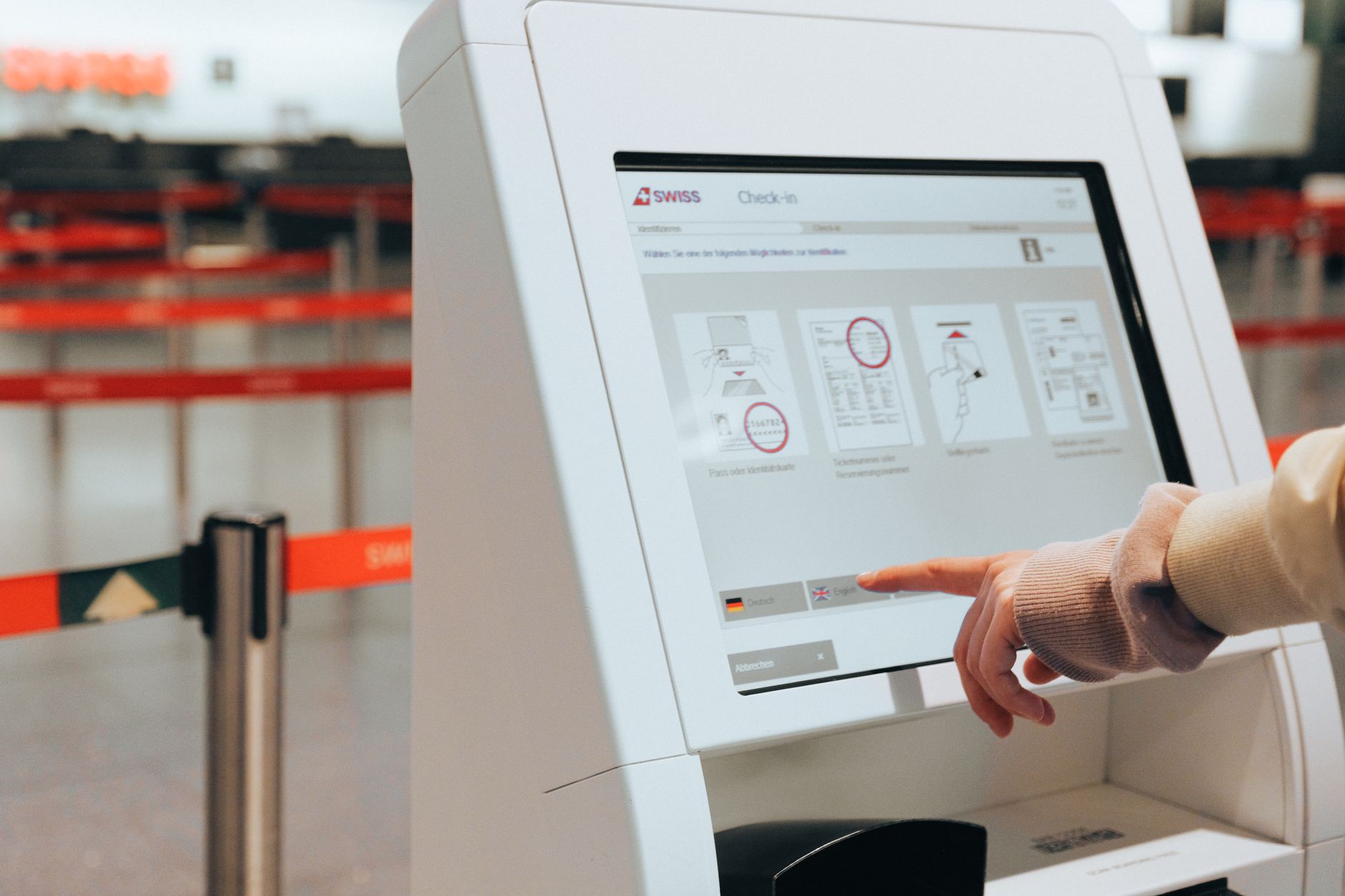
Segmentation attempts to charge each passenger their maximum willingness to pay. Business travelers booking 48 hours before departure typically face fares 3-5 times higher than leisure travelers who booked six weeks earlier. Saturday-night stay requirements, advance purchase minimums, and change fees (where they still exist) all serve to separate price-sensitive leisure travelers from expense-account corporate buyers. The systems have become extraordinarily good at this discrimination, in the economic sense of the term.
Competitor matching happens in near-real-time. When United drops the 7:00 AM Newark-to-Chicago flight by $40, American's system notices within minutes and adjusts its 7:15 AM offering accordingly. This creates a kind of equilibrium on competitive routes, but it's an equilibrium at whatever price level the least aggressive competitor will tolerate, usually much higher than it would be with five carriers instead of two or three.
Will Flight Prices Go Down?
The honest answer contains both short-term hope and long-term realism. Prices fluctuate significantly around their elevated baseline, which means strategic booking can still find relative bargains. Tuesdays and Wednesdays remain 12-18% cheaper than Fridays and Sundays on average, according to Airlines Reporting Corporation data[7]. Booking domestic flights 4-6 weeks in advance typically yields fares 15-22% below the week-before-departure price. January and February, excluding holiday weekends, offer the lowest fares of the year on most routes, with prices 20-30% below summer peaks.
New aircraft deliveries should gradually reduce operating costs. The Boeing 737 MAX and Airbus A321neo burn 14-17% less fuel per seat mile than the planes they replace. As these aircraft become larger shares of airline fleets, they represented about 28% of narrow-body capacity in 2025, up from 12% in 2021, the cost savings could translate to modestly lower fares, particularly if fuel prices stabilize or decline. That's a structural tailwind that could shave 5-8% off the cost basis over the next five years.
But structural factors point toward prices remaining elevated relative to pre-2020 norms. Consolidation won't reverse; if anything, further merger discussions bubble up every eighteen months, though regulatory scrutiny has intensified. New entrant airlines like Breeze and Avelo have launched with encouraging service, but they collectively operate less than 2% of domestic capacity, too small to move the national price equilibrium. For meaningful price competition to return, one of the major carriers would need to abandon revenue management discipline and start a fare war, which shareholder pressure makes unlikely.
Inflation-adjusted prices might stabilize rather than continue rising. If general inflation runs at 2.5% annually and airfares rise at 1.5%, that represents a real-terms decrease, even if the nominal price on your credit card statement keeps climbing. That's probably the best-case scenario for the next 3-5 years: fares that rise more slowly than other travel costs, creating a relative improvement rather than an absolute one.
Are Flights More Expensive Than Before COVID?
Definitively yes, though the gap has narrowed from its 2022-2023 peak. The Bureau of Labor Statistics Consumer Price Index for airline fares stood at 311.4 in December 2025[6] (using a 2019 base of 100), representing a 31.4% nominal increase. The overall CPI reached 118.2 over the same period, meaning airline fares have outpaced general inflation by 13.2 percentage points. Adjusting for inflation, flying costs about 11% more in real purchasing power than it did before the pandemic.
That aggregate obscures substantial route-level variation. Highly competitive routes, New York to Florida, California corridors, Texas triangles, have seen more modest increases of 15-20% nominal, 3-8% real. Routes dominated by a single carrier have seen increases of 40-50% nominal, 20-25% real. The distribution matters more than the average; your personal experience depends entirely on where you're trying to fly.
International fares tell a more complex story. Transatlantic routes to London, Paris, and Frankfurt have seen prices return to near-2019 levels in real terms, thanks to intense competition and restored capacity. Routes to Asia remain 15-25% elevated as carriers have been slower to restore pre-pandemic frequency, and demand has recovered faster than supply. Latin American and Caribbean routes price close to 2019 levels, supported by leisure demand and low-cost carrier expansion.
The pandemic accelerated existing trends rather than creating entirely new pricing dynamics. Consolidation was already reducing competition; COVID merely provided cover for capacity cuts that became permanent. Premium cabin pricing has risen even faster than economy, up 35-42% on major routes[1], as airlines discovered that high-revenue passengers would pay almost anything for lie-flat seats on long flights. Basic economy, introduced by most carriers in 2016-2018, has become the new price floor, with standard economy occupying the space once held by mid-tier fares.
One element has improved: ticket flexibility. Many carriers eliminated change fees on most domestic economy tickets in 2020, a passenger-friendly shift that has stuck. Southwest maintains its no-fee-ever policy. These changes don't reduce the ticket price, but they do reduce the total cost of uncertainty, which matters for travelers whose plans might shift.
When Flights Are Actually Cheap
Pricing discipline breaks down in predictable circumstances. When a new route launches, introductory fares often run 30-40% below what the algorithm will eventually settle on, as the airline tries to establish market share and gather booking data. When a plane is leaving in 36 hours with 40 empty seats, the revenue management system capitulates, dropping prices dramatically because $150 is infinitely better than $0 for an empty seat. When airlines run periodic sales, usually Tuesday through Thursday for weekend travel 6-8 weeks out, they're clearing inventory the algorithms predict won't sell at current prices.
The truth the systems have learned is that seats are a perfectly perishable commodity. Once the cabin door closes, that seat's revenue potential vanishes forever. That creates the only reliable downward pressure on fares: the approaching reality of an empty seat. For travelers with flexibility, this remains the best tool for finding acceptable prices in an expensive market.
Last week, I booked a Thursday afternoon flight from San Francisco to Portland for $89 on Alaska, departing in 11 days. The algorithm looked at its booking curve, saw it was trailing last year's pace, and decided a seat flown at $89 beats a seat flown empty. Twenty minutes later, the same flight showed $127. Somewhere in a data center outside Seattle, a piece of code had noticed the booking, recalculated the odds, and adjusted accordingly. The machine doesn't care about fairness or consistency. It only cares about the next seat, the next day, the next infinitesimal optimization in an endless pursuit of revenue. Understanding that is the closest thing to power a traveler has.
Frequently asked questions
Why are flights so expensive in 2026?
Three structural forces drive 2026 pricing. First, consolidation has left 79% of domestic routes with only one or two nonstop carriers, and single-carrier routes average 43% higher fares than competitive routes. Second, jet fuel averaged $2.89 per gallon in December 2025, up 38% from the 2019 average of $2.09, adding 8-10% to baseline operating costs. Third, demand has proven inelastic. TSA checkpoint numbers for 2025 exceeded 2019 levels by 6.3% despite higher fares. The average domestic roundtrip reached $398 in Q4 2025, up 27.6% from $312 in Q4 2019, outpacing general inflation. When competitive pressure evaporates and people keep flying regardless of price, carriers have no incentive to lower fares.
What causes airline ticket prices to rise?
Fuel costs flow through within weeks. When crude oil jumped from $71 to $89 per barrel between March and August 2025, domestic fares rose in near-lockstep. Labor costs increased substantially, with pilot contracts raising compensation 30-40% and average airline employee compensation up 21% from 2019 to 2025. Route capacity reductions also drive prices upward. Airlines consolidate three daily flights into two, betting they can fill larger planes at higher prices. Airport gate fees have increased 15-18% since 2019 at major hubs. The least visible driver is reduced competition. Where Southwest used to force legacy carriers to match prices, Southwest added only 8 new routes in 2025 compared to 32 in 2014.
Will flight prices go down?
Prices will fluctuate around an elevated baseline, not return to pre-2020 levels. Strategic booking helps: Tuesdays and Wednesdays run 12-18% cheaper than Fridays and Sundays, and booking domestic flights 4-6 weeks in advance yields fares 15-22% below week-before prices. New fuel-efficient aircraft could shave 5-8% off cost basis over five years. Best-case scenario is fares that rise more slowly than general inflation, creating a relative improvement rather than an absolute decrease. Consolidation won't reverse, and new entrants like Breeze and Avelo operate less than 2% of domestic capacity, too small to move national pricing. For meaningful competition to return, a major carrier would need to start a fare war, which shareholder pressure makes unlikely.
How do airlines actually set prices?
Revenue management systems partition each flight into 15-20 booking classes, adjusted continuously as departure approaches. A single flight's prices might be adjusted 200-400 times between opening for sale and departure. These systems ingest current bookings versus historical patterns, competitor pricing, fuel prices, weather forecasts, and demand events like conventions. They optimize for revenue per seat mile, preferring a plane at 75% capacity with high-fare passengers over 95% capacity with discounted tickets. Business travelers booking 48 hours out face fares 3-5 times higher than leisure travelers who booked six weeks earlier. Competitor matching happens in near-real-time. When United drops a Newark-Chicago flight by $40, American's system notices within minutes and adjusts accordingly.
Are flights more expensive than before COVID?
Yes, definitively. The Bureau of Labor Statistics Consumer Price Index for airline fares stood at 311.4 in December 2025, using a 2019 base of 100, representing a 31.4% nominal increase. General inflation reached 118.2 over the same period, meaning airline fares outpaced inflation by 13.2 percentage points. Adjusting for inflation, flying costs about 11% more in real purchasing power than before the pandemic. Route-level variation is substantial. Highly competitive routes saw 15-20% nominal increases, while single-carrier routes saw 40-50% nominal increases. Premium cabin pricing rose even faster, up 35-42% on major routes, as airlines discovered high-revenue passengers would pay almost anything for lie-flat seats on long flights.
Sources and references
- Bureau of Transportation Statistics (BTS)
- U.S. Department of Transportation route concentration analysis
- U.S. Energy Information Administration (EIA) jet fuel data
- Airlines for America (A4A) operating cost research
- Transportation Security Administration (TSA) checkpoint data
- U.S. Bureau of Labor Statistics (BLS) employment & CPI data
- Airlines Reporting Corporation (ARC) booking analysis
- U.S. PIRG transportation research
- U.S. DOT Final Rule on automatic refunds