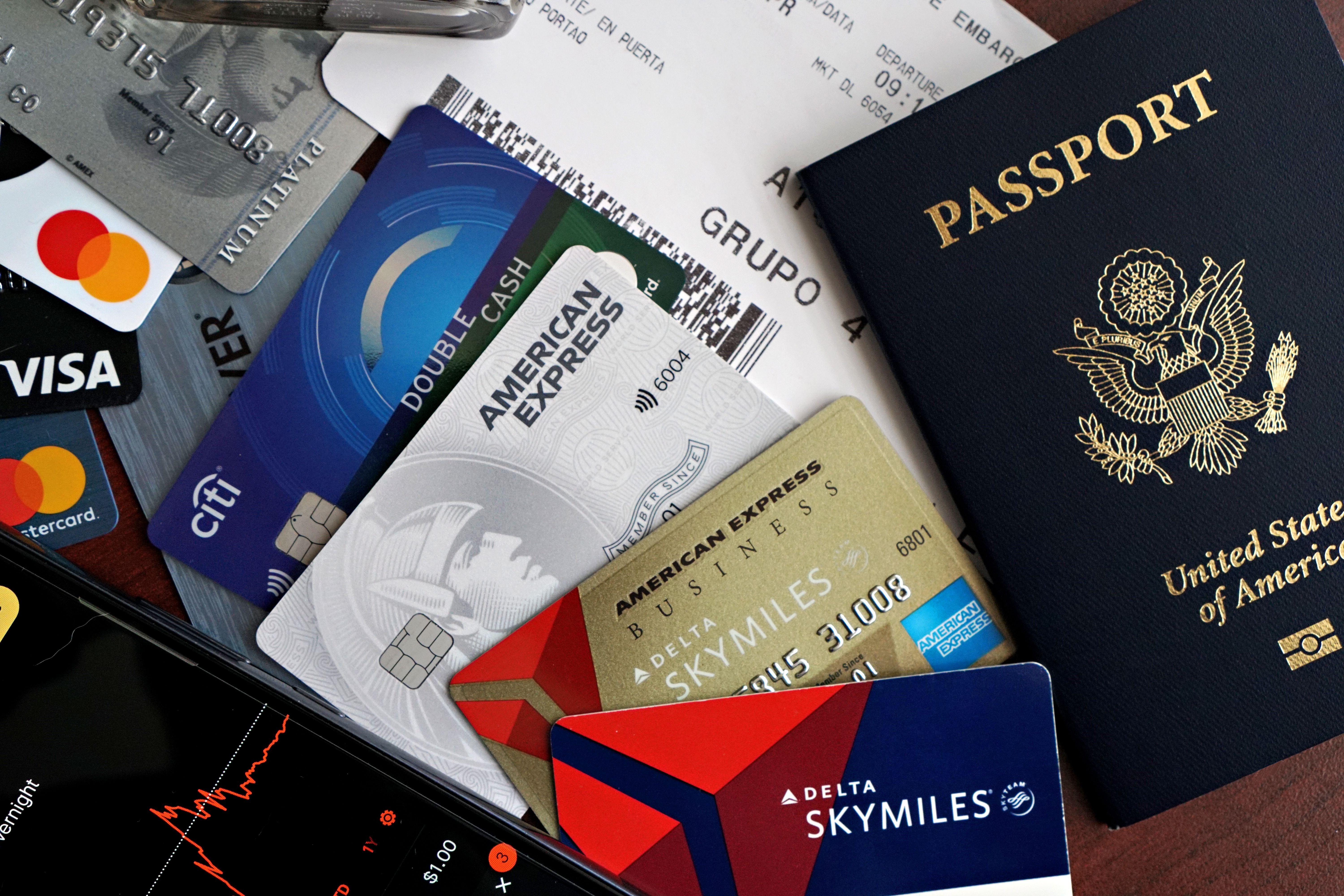
A couple books a $12,000 honeymoon to Greece in February, then discovers in April that the bride's sister moved her wedding to the same week. A family reserves a Disney vacation six months out, only to face an unexpected job relocation two weeks before departure. These are exactly the scenarios where cancel for any reason travel insurance becomes relevant, and where most travelers discover that standard travel insurance won't help them at all.
Cancel For Any Reason coverage, widely known as CFAR, represents the most flexible, and most expensive, option in the travel insurance market. It's also among the most misunderstood. Our claims-recovery team regularly encounters travelers who assumed their standard travel insurance policy would cover a change of heart, only to learn after the fact that "any reason" coverage requires a specific upgrade purchased under strict conditions.
Understanding whether CFAR justifies its substantial premium increase depends entirely on your trip's financial profile, your timeline, and how much flexibility you're willing to pay for upfront.
What Is CFAR Travel Insurance?
Cancel For Any Reason insurance is an optional upgrade to comprehensive travel insurance policies that allows you to cancel your trip for literally any reason not covered by the base policy, and receive partial reimbursement of your prepaid, non-refundable trip costs. Standard travel insurance policies cover only specific, documented events: sudden illness, jury duty, natural disasters at your destination, or airline bankruptcy, for instance. They explicitly exclude discretionary cancellations like work conflicts, fear of flying, relationship changes, or simply deciding you'd rather not go.[1]
CFAR fills that gap by covering the categories standard policies won't touch. If you wake up the morning of your trip and simply don't want to board the plane, CFAR allows you to cancel and recover a portion of your costs. The trade-off is significant: CFAR typically reimburses only 50% to 75% of your non-refundable expenses, meaning you'll still lose 25% to 50% of your trip investment even with coverage in place.[2]
This partial reimbursement structure distinguishes CFAR from standard travel insurance claim scenarios, where covered events typically result in 100% reimbursement of eligible costs. CFAR is designed as a safety net for expensive trips where forfeiting even half the cost is preferable to losing everything.
How Does Cancel For Any Reason Coverage Work?
CFAR operates under a specific set of mechanics that differ meaningfully from standard travel insurance. The reimbursement model, timing requirements, and eligibility rules create a framework that's both more flexible and more restrictive than many travelers expect.
Reimbursement Structure and Limits
Most CFAR policies reimburse between 50% and 75% of your total insured trip cost, with 50% being the industry standard and 75% available from select carriers at higher premiums. That reimbursement applies only to prepaid, non-refundable expenses you've insured under the policy, flights, hotels, tours, and other travel arrangements paid in advance. If your airline offers you a travel credit worth 80% of your ticket value, CFAR won't stack on top of that; it covers only the truly unrecoverable portion of your costs.[3]
The cancellation must occur at least 48 hours before your scheduled departure. Cancel 36 hours out, and most CFAR policies won't pay. This buffer prevents same-day cancellations and gives insurers a defined cutoff point for claims processing.
Purchase Window and Eligibility Requirements
CFAR isn't available for purchase at any time. Nearly all carriers require you to buy CFAR within a specific window, typically 14 to 21 days of making your initial trip deposit or payment. Miss that deadline, and you can't add CFAR later, even if your trip is still months away. This purchase window exists because CFAR is designed to insure against future uncertainty, not known risks. Insurers won't sell you "any reason" coverage after you've already begun to have second thoughts about a trip.
Additionally, most CFAR policies require you to insure 100% of your prepaid, non-refundable trip costs. You can't insure just your $8,000 flight and skip the $4,000 hotel. The entire trip cost must be covered under the base comprehensive policy for CFAR to apply, which increases both your base premium and the CFAR add-on cost.
Our claims-recovery team has helped travelers navigate situations where denied travel insurance claims stemmed from missing these eligibility windows or failing to meet the 100% trip cost requirement, technicalities that can void an otherwise legitimate CFAR claim.
Is CFAR Worth the Extra Cost?
The value proposition of CFAR depends on three variables: your trip's total cost, your personal risk tolerance, and the likelihood you'll need the flexibility CFAR provides. For a $15,000 trip, losing $7,500 (with 50% CFAR reimbursement) may be far more palatable than forfeiting the entire amount. For a $2,000 weekend getaway, paying an extra $150 to $200 for CFAR to potentially recover $1,000 may feel less compelling.
CFAR makes the most financial sense in scenarios where standard travel insurance exclusions represent real risks. Multi-generational family trips planned a year in advance face higher odds of someone's schedule changing. Destination weddings booked 18 months out may conflict with unforeseen personal events. International work travel faces potential disruption from employer policy changes that wouldn't qualify as a covered reason under standard policies.
Consider a $10,000 trip to Japan booked eight months in advance. A standard comprehensive policy might cost $600. Adding CFAR increases that to $900, a $300 premium for the option to cancel for any reason and recover $5,000 (at 50% reimbursement). If your cancellation risk is genuinely unknowable, aging parents, uncertain work demands, complex group dynamics, that $300 buys meaningful optionality. If your risk is low and your trip is modest, CFAR often costs more than the peace of mind it delivers.[2]
It's worth noting that some travelers can achieve similar flexibility through other means. Booking refundable airfares, hotels with free cancellation policies, and tours with flexible change terms can reduce or eliminate non-refundable exposure without paying for CFAR. The gap CFAR fills is the scenario where you've committed to non-refundable rates to save money upfront, then need an escape hatch later.
When Can I Add CFAR to My Policy?
Timing is the single most restrictive aspect of CFAR coverage. The typical enrollment window is 14 to 21 days from your initial trip deposit, though some carriers extend this to 30 days. The clock starts when you make your first payment toward the trip, whether that's a deposit on a cruise, a flight booking, or a hotel prepayment. Once that window closes, CFAR becomes unavailable for that trip, regardless of how far in the future your departure date sits.
This short purchase window often catches travelers off guard. Many people book a trip, wait to see how plans develop, then decide weeks or months later that they want trip insurance. By that point, CFAR is no longer an option. Insurers structure the window this way to prevent adverse selection, the tendency for people to buy insurance only when they're already anticipating a problem.
The best practice is to evaluate CFAR at the time of your initial trip booking, even if you're not certain you'll need it. Waiting even a few weeks can close the door permanently. For travelers managing flight delay compensation or other trip disruptions, the difference between proactive and reactive insurance decisions often determines whether coverage applies when it's needed most.
Some policies also require that you be medically fit to travel at the time you purchase CFAR. If you're already dealing with a health issue that might prevent travel, carriers may deny CFAR eligibility or exclude that condition from coverage. This pre-existing condition consideration adds another layer to the narrow purchase window.
How Much Does CFAR Add to Travel Insurance Cost?
CFAR typically increases your base travel insurance premium by 40% to 50%, though the exact markup varies by carrier, trip cost, and traveler age. For a base comprehensive policy costing $400, adding CFAR would bring the total premium to approximately $560 to $600. For a $1,000 base policy, expect CFAR to push the total to $1,400 to $1,500.[1]
Because travel insurance premiums are calculated as a percentage of your total insured trip cost, often 5% to 10% for comprehensive coverage, CFAR's percentage-based add-on amplifies as trip costs increase. A $20,000 trip might carry a $1,200 base premium and a $1,800 total premium with CFAR, meaning the CFAR upgrade alone costs $600. That's a meaningful sum, but it must be weighed against the potential to recover $10,000 (at 50% reimbursement) if you need to cancel for a non-covered reason.
Age and Risk Factors in CFAR Pricing
Traveler age significantly impacts CFAR cost. Older travelers face higher base insurance premiums due to increased medical risk, and CFAR's percentage-based add-on magnifies that effect. A 70-year-old couple might pay $2,000 for comprehensive coverage on a $15,000 trip, with CFAR pushing that to $3,000. Younger travelers on the same trip might see base premiums of $800 and CFAR totals around $1,200.
Trip length also influences cost. Longer trips carry higher base premiums, and CFAR scales accordingly. A two-week international trip will cost more to insure than a four-day domestic getaway, both for the base policy and the CFAR add-on.
Comparing CFAR Across Carriers
Not all CFAR policies are identical. Some carriers reimburse 75% of trip costs instead of the standard 50%, but charge a steeper premium increase, sometimes 60% to 70% above base cost. Others offer 50% reimbursement with a 40% premium bump. The purchase window varies as well, with some insurers allowing 21 or even 30 days while others hold firm at 14 days.[4]

Reading the fine print is essential. Some CFAR policies exclude specific trip components, travel booked with points or miles, for instance, or impose additional restrictions on group travel or trip lengths exceeding a certain number of days. Our claims-recovery team at RecoverAir routinely sees CFAR denials rooted in policy-specific exclusions that travelers didn't identify before purchasing.
Alternatives to CFAR Coverage
CFAR isn't the only way to build flexibility into your travel plans, and for many trips, alternative strategies deliver better value. Booking refundable airfares, even at a premium, often costs less than the CFAR add-on while providing 100% refundability rather than 50% to 75%. Airlines typically charge $100 to $300 more for refundable economy tickets on domestic routes; for trips under $2,000, that upcharge may be smaller than the combined cost of base insurance plus CFAR.
Hotel bookings made through free-cancellation policies, standard on most direct bookings and many online travel agencies, eliminate accommodation risk entirely. Tours and activities increasingly offer flexible change and cancellation terms, particularly post-pandemic. Stacking these individual flexibilities can reduce your non-refundable exposure to the point where CFAR becomes unnecessary.
Credit card travel protections offer another layer of coverage. Many premium travel cards provide trip cancellation and interruption insurance when you pay for travel with the card, though these benefits rarely include "any reason" coverage. They do, however, cover many standard insurable events, illness, severe weather, and certain family emergencies, at no additional cost beyond the annual fee. For travelers already carrying those cards, the incremental value of a standalone travel insurance policy (with or without CFAR) shrinks considerably.
For travelers managing lost or delayed baggage claims or dealing with hotel overbooking disputes, understanding the full spectrum of coverage, insurance, credit card benefits, and carrier liability, creates a more complete picture of financial protection than CFAR alone provides.
When CFAR Makes Sense, and When It Doesn't
CFAR delivers the most value in a few specific contexts. Expensive trips booked far in advance, cruise deposits made 18 months out, international group travel planned a year ahead, face legitimately unknowable risks that standard insurance won't cover. Multi-generational travel, where the cancellation of one participant might cascade into a broader trip disruption, benefits from CFAR's flexibility. Travelers with genuinely uncertain schedules, freelancers, employees in volatile industries, or those managing complex caregiving responsibilities, may find the optionality worth the cost.
CFAR makes less sense for short-notice bookings where the purchase window is tight and the planning uncertainty is low. Weekend getaways, trips booked within a few weeks of departure, and travel with minimal non-refundable components rarely justify CFAR's premium. Similarly, travelers with robust credit card travel protections or those willing to accept the risk of forfeiting a modest trip investment may find CFAR's cost unjustifiable.
The break-even calculation is straightforward: if your total trip cost is $8,000 and CFAR adds $300 to your insurance premium, you're paying $300 for the option to recover $4,000 (at 50% reimbursement) if you cancel for a non-covered reason. That gamble makes sense if your subjective probability of needing that flexibility exceeds 7.5% (the $300 premium divided by the $4,000 potential recovery). If your cancellation risk is lower, the math tilts against CFAR.
Ultimately, CFAR is insurance for peace of mind as much as financial protection. For travelers who sleep better knowing they can walk away from a major trip investment with half their money back, the premium may justify itself even if the policy never gets used. For those comfortable with calculated risks and non-refundable commitments, CFAR often represents an expensive hedge against low-probability outcomes.
Sources
- U.S. Travel Insurance Association, "Cancel For Any Reason Coverage Trends and Consumer Data," 2024.
- Squaremouth, "CFAR Market Analysis and Reimbursement Rate Study," 2025.
- National Association of Insurance Commissioners (NAIC), "State Insurance Regulator CFAR Policy Filings," 2024.
- Consumer travel insurance carrier policy comparison data, including Allianz, Travel Guard, Travelex, and Generali CFAR offerings, 2025.
Frequently asked questions
What is CFAR travel insurance?
{"question":"What is CFAR travel insurance?","answer":"Cancel For Any Reason (CFAR) insurance is an optional upgrade to standard travel insurance that allows you to cancel your trip and receive a refund for non-refundable costs even when you don't have a covered reason. Unlike basic cancel-for-cause policies, CFAR provides reimbursement for circumstances beyond the standard policy exclusions, such as poor weather, change of mind, or work conflicts."}
How does Cancel For Any Reason coverage work?
{"question":"How does Cancel For Any Reason coverage work?","answer":"When you cancel your trip for any reason, you submit a claim to the insurance provider and typically receive 50-75% reimbursement of your prepaid, non-refundable trip costs. Most CFAR policies require that you cancel before your trip departure date and within the claim filing deadline, usually 30-90 days after cancellation."}
Is CFAR worth the extra cost?
{"question":"Is CFAR worth the extra cost?","answer":"CFAR is worth considering if you're booking expensive, non-refundable trips or have uncertain circumstances that might change before departure. The value depends on your risk tolerance and booking costs—it's most economical for high-ticket trips where the reimbursement percentage justifies the premium, typically 10-20% of your total trip cost."}
When can I add CFAR to my policy?
{"question":"When can I add CFAR to my policy?","answer":"CFAR must typically be purchased within 14-21 days of your initial trip deposit or flight booking, and before you depart. Adding it after this window usually isn't possible, so it's essential to decide early if you want this coverage."}
How much does CFAR add to travel insurance cost?
{"question":"How much does CFAR add to travel insurance cost?","answer":"CFAR generally adds 50-100% to your base travel insurance premium, meaning a $150 policy might cost $225-250 with CFAR included. The exact increase depends on your destination, trip length, and total trip cost, with premium trips sometimes paying $500+ for comprehensive CFAR coverage."}
Sources and references
- U.S. Travel Insurance Association CFAR data
- Squaremouth CFAR market analysis
- state insurance regulator CFAR filings
- carrier CFAR policy comparisons
- U.S. DOT Final Rule on automatic refunds