A long delay at Portland International has a way of revealing exactly how much airlines rely on passengers not knowing what they are owed. The gate agent announces a four-hour hold, offers a voucher that expires in twelve months, and most travelers accept it quietly because the alternative feels complicated. It is not. Under federal rules that took effect in 2024, Portland flight delay compensation has moved out of the airline's discretion and into a defined legal framework, and the gap between what carriers offer and what passengers are actually owed can be significant.[1]
What the 2024 DOT Rule Actually Changed
For years, airline delay and cancellation policy was a patchwork of goodwill gestures dressed up as policy. Carriers offered credits, vouchers, and rebooking options at their own pace, on their own terms. The U.S. Department of Transportation's 2024 final rule changed the architecture of that arrangement.[1] Passengers are now entitled to automatic cash refunds, not travel credits, when a domestic flight is delayed by three hours or more, or when a carrier cancels a flight and the passenger chooses not to accept the rebooking offered.[1]
The word "automatic" carries real weight here. Airlines are not supposed to make you ask, negotiate, or threaten a credit card dispute to receive what the rule requires. At PDX, where Alaska Airlines operates the largest share of traffic, that obligation falls squarely on the carrier regardless of whether the delay stems from a mechanical issue, a crew scheduling problem, or a cascading network backup from the previous day's operations.[3] Weather is a separate and often misunderstood category, which we address below.
What the rule does not do is calculate your total loss for you. A refund on the original fare is the floor, not the ceiling. Travelers who missed onward connections, booked replacement tickets at last-minute prices, or paid for overnight lodging because a Portland delay stranded them past the last departure of the evening may have claims that go beyond the ticket price itself. Documenting those costs from the moment the disruption begins is the step most passengers skip, and it is often the reason a claim comes back short or denied.
Alaska Airlines Flight Delays at PDX: What the Carrier's Own Plan Commits To
Alaska Airlines publishes a customer service plan that lays out its commitments for delays and cancellations, and those commitments are not the same as the DOT's minimum requirements.[3] Understanding the difference matters, because Alaska may offer meal vouchers or hotel accommodation in certain delay scenarios while the federal rule governs the cash refund floor beneath all of it.
When an Alaska delay at PDX crosses into an overnight situation, the carrier's plan addresses lodging and ground transportation for controllable delays, meaning situations the airline could reasonably have prevented.[3] The distinction between controllable and uncontrollable is where most disputes begin. Carriers have a strong incentive to classify disruptions as weather-related or air traffic control issues, both of which fall outside their controllability commitments. Passengers, understandably, often see a mechanical delay reclassified as a weather hold and feel the ground shift beneath their claim.
The Weather Excuse and How to Answer It
No single phrase has denied more legitimate delay claims than "weather-related disruption." Carriers apply it broadly, sometimes to delays that began with a mechanical issue three time zones away and only intersected with weather at the margins. Understanding how to read that classification, and when to push back, is where the real work of recovery begins.
Under the DOT's 2024 framework, the cash refund obligation applies regardless of the cause of a cancellation or significant delay.[1] This is the part most passengers do not realize. Whether the delay stems from a Pacific storm, a crew rest violation, or a ground stop at a connecting hub, the refund entitlement on the original ticket remains intact if the flight meets the threshold.[1] What weather classification does affect is the carrier's ancillary commitments: lodging, meals, and ground transport under Alaska's customer service plan are tied to controllable disruptions, so a genuine weather event may remove those extras while leaving the refund floor in place.[3]
When Alaska or any carrier at PDX codes a delay as weather-driven, ask for the specific reason in writing and request the tail number of your aircraft. If that same aircraft was delayed on a previous leg earlier in the day, the root cause may be mechanical or operational, not meteorological. Carriers are not always wrong when they cite weather, but the classification is worth examining before you accept it as the end of the conversation.
Building a Claim That Holds Up
Most delay claims that fail do so before the passenger ever submits a form. The documentation gap is the real adversary, not the airline's legal team. Start collecting evidence the moment you receive a delay notification, and keep collecting until you are home.
A structured approach helps. The steps below reflect what claims reviewers consistently look for when evaluating a Portland delay submission:
- Screenshot the notification. Capture the airline's text, email, or app alert with the timestamp visible. This establishes when the carrier knew about the disruption.
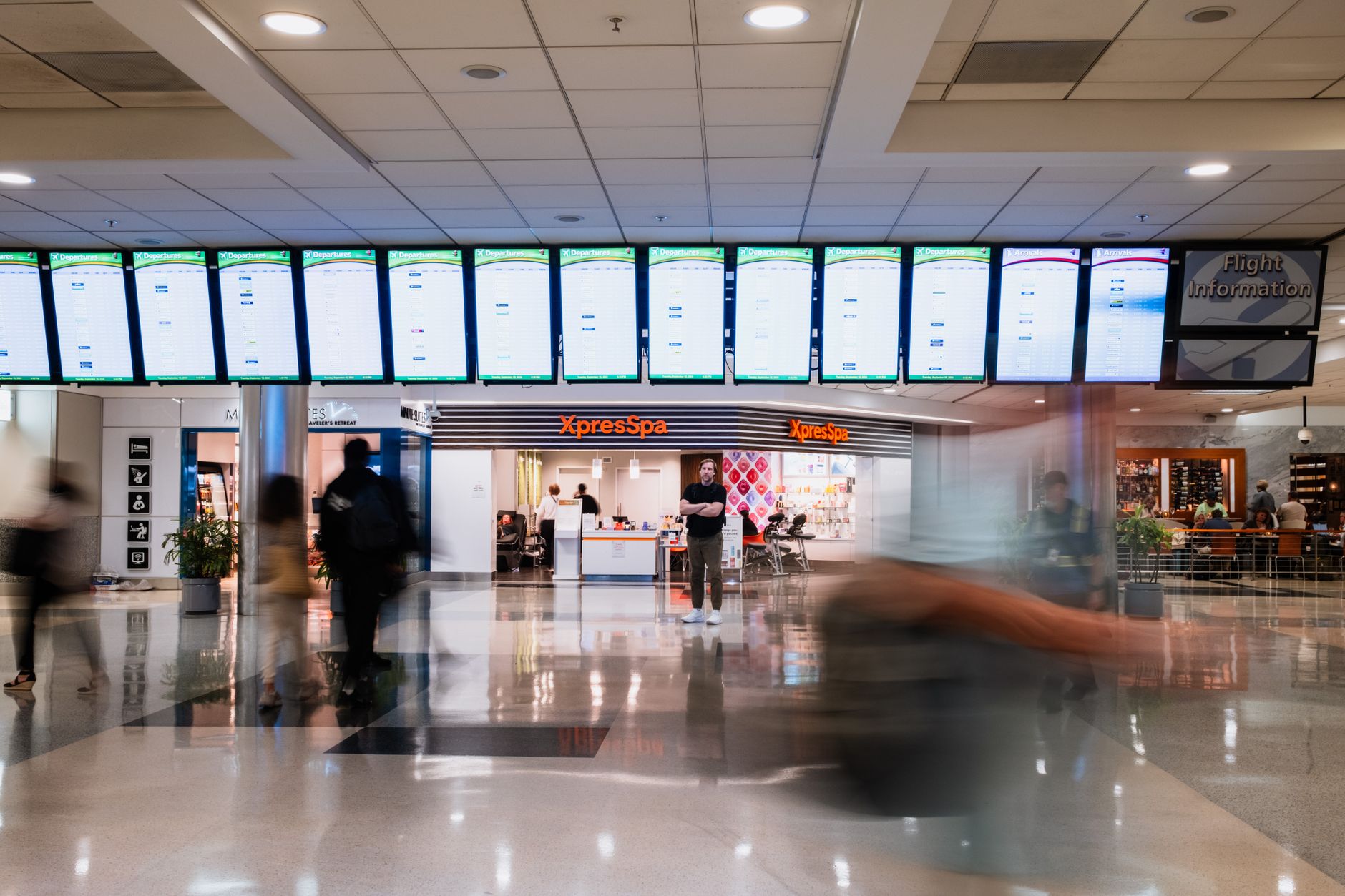
- Photograph the departures board. A photo of the PDX board showing your flight's status and the posted time creates an independent record that is harder to dispute than an airline's internal logs.
- Save every receipt. Meals, ground transportation, and any hotel booked because of the delay are potentially recoverable under the carrier's service plan for controllable disruptions. Keep itemized receipts, not just bank statements.
- Request the delay reason in writing. Ask a gate agent or use the airline's chat function and save the transcript. Written classifications matter when a dispute escalates.
- Track your rebooking costs separately. If you purchased a new ticket to catch a missed onward flight, that fare difference belongs in a separate line of your claim, not buried in the general refund request.
Travelers who miss a connecting flight because of a delayed inbound departure face a compounding problem. The missed connection carries its own recovery logic, and the playbook for that situation is worth understanding before you file. That recovery guide on DOT rules for Providence flight delays walks through a nearly identical federal framework and shows how the same documentation approach applies across domestic markets.
Who Gets Left Behind When Claims Are Filed Informally
Oregon's Division of Financial Regulation provides a supplemental layer of consumer protection when a carrier or insurer mishandles a claim improperly.[2] That backstop matters most for travelers who filed informally, accepted a form credit without realizing they could request cash, or never received written confirmation of why their claim was reduced.
Travelers whose disruption involved a connection through a larger hub should also note that the patterns described in the Raleigh delay compensation guide apply equally here: the DOT refund math works the same regardless of which airport originates the itinerary, and the documentation expectations are consistent across domestic carriers.
Passengers who booked through an online travel agency face an additional complication. The online travel agency (OTA) sits between the traveler and the airline's refund system, and claims submitted through that intermediary sometimes stall or arrive incomplete. Knowing which entity is responsible for processing the refund before you file saves significant time later.
Taking Action Before the Window Closes
Filing a delay claim is not complicated, but timing shapes the outcome more than most travelers expect. The longer documentation sits uncollected, the more the record fades into airline systems that are not designed to help you reconstruct it later.
Start the formal process within a few days of returning home. For Alaska Airlines delays at PDX, the initial claim goes directly to the carrier through its refund request portal, and the submission should reference the DOT's 2024 automatic refund rule explicitly.[1] Citing the regulation by name signals that you understand what the airline is legally required to do, not merely what it chooses to offer.
If the carrier responds with a travel credit rather than a cash refund, that response is itself a starting point for escalation. Push back in writing, referencing the original delay duration and the federal refund threshold.[1] Oregon's Division of Financial Regulation accepts consumer complaints when a carrier or insurer mishandles a refund obligation, and filing there creates a documented record that carries weight in any subsequent dispute.[2]
Passengers who feel the claim process stalling, or who face a denial citing documentation gaps or delay classification disputes, have a structured recovery option in RecoverAir's flight delay recovery service. The service handles the claim administration and escalation work directly, so travelers are not navigating airline bureaucracy alone during what is already a disruptive period.
What You Can Actually Recover
The refund on your original fare is the guaranteed floor under federal rules.[1] Beyond that floor, what you can recover depends on how the delay was classified and how thoroughly you documented consequential costs.
For controllable delays under Alaska's customer service plan, meals, lodging, and ground transport may be reimbursable.[3] Travelers who purchased last-minute replacement tickets to catch a missed onward connection have a separate line of recovery distinct from the original fare refund. That distinction matters: bundling everything into a single refund request sometimes results in the consequential costs being dismissed as outside scope, when they belong in a different part of the claim entirely.
Travel insurance adds another layer worth examining. Many trip interruption policies cover additional expenses incurred during a significant delay, though insurers frequently deny those claims for documentation gaps or pre-existing-condition exclusions. If your travel insurance claim has already been denied, the recovery guide at appealing a denied travel insurance claim covers the exact patterns those denials follow. The overlapping picture of what a New York connection disruption looks like in practice is covered in detail in the companion piece on recovering from a failed New York connection, where the same multi-layered claim logic applies.
Portland delays are frustrating precisely because the remedies are real and the documentation requirements are manageable, yet most travelers leave money on the table simply by accepting the first offer. Knowing the rule, building the record, and filing through the right channel converts a stressful disruption into a recoverable one. That is the education worth carrying through every gate at PDX.
Sources and references
- U.S. DOT Final Rule on automatic refunds
- Oregon Division of Financial Regulation
- Alaska Airlines customer service plan