A flight delay at Eppley Airfield can unravel a careful itinerary faster than the weather board updates. Travelers who miss a connection because a Southwest departure sits idle at the gate for three hours often discover, mid-claim, that the airline's response is a travel credit rather than a cash refund. That gap between what a carrier offers and what federal rules actually require is where most Omaha flight delay compensation cases stall. Knowing the difference, before you file anything, is the single most useful thing you can carry through OMA's terminal.
Federal Refund Rules Changed What Omaha Travelers Are Owed
A 2024 U.S. Department of Transportation final rule reshaped the compensation landscape for every domestic air traveler, and OMA passengers are fully covered by it.1 The rule establishes that airlines must issue automatic cash refunds for canceled flights and for what the DOT defines as significant delays: three or more hours for domestic itineraries. Automatic means the airline cannot substitute a voucher, a credit, or miles unless the passenger affirmatively chooses that alternative in writing.
That last clause matters enormously in practice. Airlines have long defaulted to future-travel credits as the first offer on the table, and many passengers accept without realizing a cash option exists. Under the 2024 rule, accepting a credit is a choice, not a requirement, and carriers are obligated to make the cash path clear and available.1 If you were handed a voucher and nothing else, the airline may not have met its obligation.
The refund applies to the full unused portion of the ticket. A traveler who completed the outbound leg of a round trip and then experienced a significant delay on the return is owed a refund on the return portion, calculated against what was paid for it. Ancillary fees paid for checked bags or seat upgrades on the disrupted segment are also refundable under the same rule.1 Use the flight delay compensation calculator to map your specific itinerary before you file.
Southwest at OMA Operates Under the Same Federal Floor
Southwest carries the largest share of passenger traffic at Eppley Airfield, which makes its customer service commitments especially relevant to OMA travelers. Southwest's published customer service plan acknowledges the carrier's responsibilities around refunds and rebooking when delays occur.3 The important distinction is between what Southwest's own plan promises and what federal law independently requires.
Southwest's internal policies can supplement federal rights but cannot replace them. A carrier plan that offers a credit where the DOT rule requires cash does not satisfy the federal standard, regardless of how the plan is worded. Travelers who accept a Southwest travel fund after a qualifying delay may have settled for less than the law provides.
Weather delays occupy a particular gray area. The 2024 DOT rule does not carve out weather as an exception to the refund requirement for cancellations and significant delays.1 The old industry habit of treating weather as a universal shield against passenger claims is not consistent with the current federal framework, and passengers have real grounds to pursue recovery through RecoverAir's flight claims channel even when a carrier points to conditions outside its control.
[1] U.S. DOT Final Rule on Automatic Refunds
[3] Southwest Customer Service Plan
Filing a Delay Claim From OMA Requires a Specific Sequence
Most claim attempts stall not because the passenger lacks a valid case but because the documentation trail is incomplete before the first message is sent. Carriers process thousands of delay requests and they look for any gap in the record that permits a denial. Building that record at the airport, while the disruption is still active, changes the outcome far more than filing quickly does.
Work through this sequence before you leave the terminal or close the airline's app:
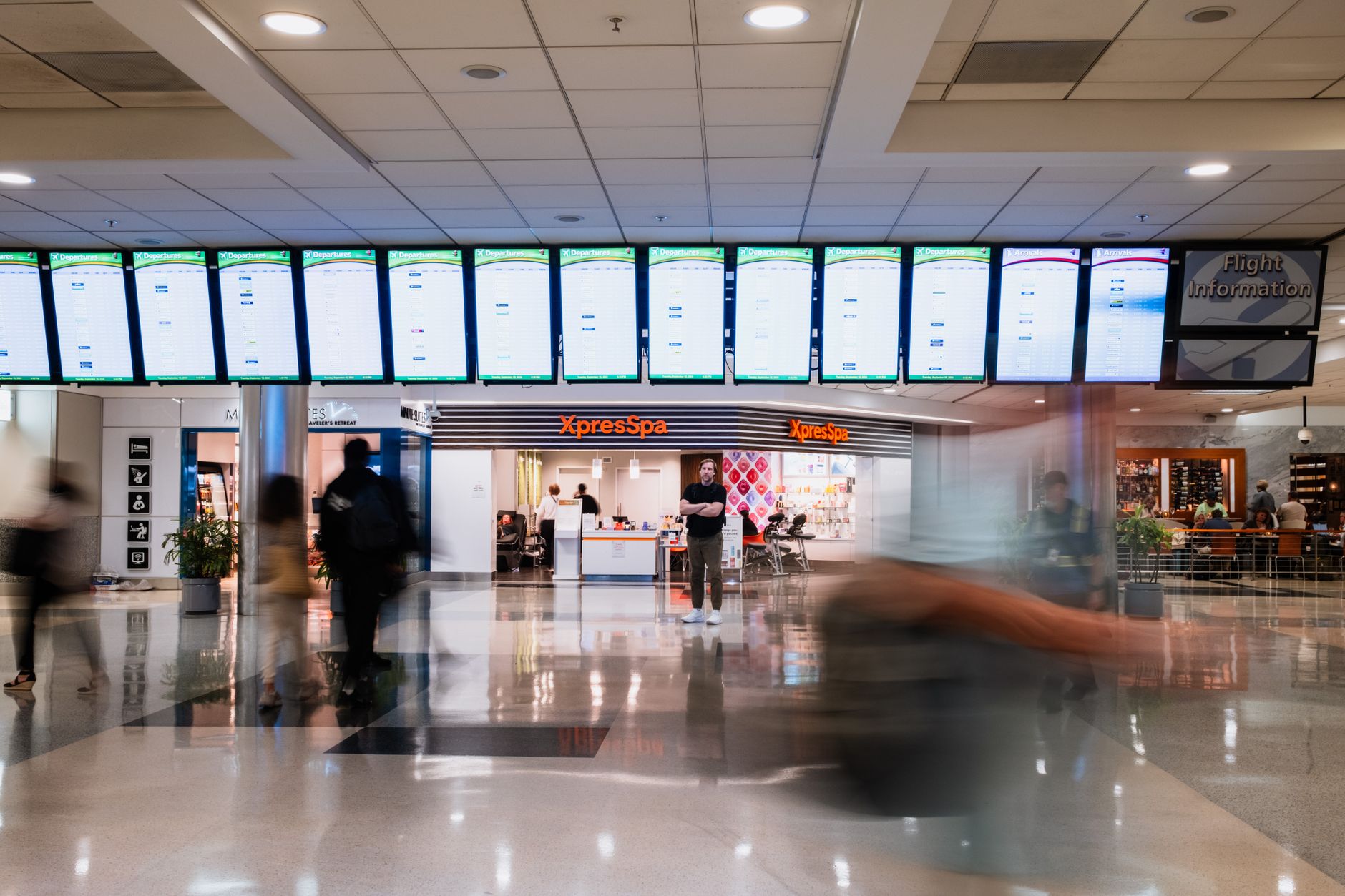
- Screenshot or photograph every status board, gate notification, and departure time update as it appears. Timestamps are your evidence.
- Request a written statement from gate staff explaining the reason for the delay. Many travelers skip this; the ones who get it have a far easier time with carriers that later describe the cause differently in writing.
- Keep every receipt for meals, ground transportation, or lodging you purchase because of the delay. These ancillary costs are part of what federal rules contemplate as refundable expenses tied to the disruption.1
- Note the exact clock time your aircraft pushed back or, if it did not, the time you were released from the gate. The DOT's three-hour threshold for domestic significant delays is measured from scheduled departure.1
- Do not accept any credit or voucher at the airport without reading what you are signing. Accepting an alternative form of compensation in writing can affect your cash refund claim.
Travelers who completed this kind of documentation at OMA and later pursued formal claims have a substantially stronger position than those who relied on the airline's own records. For a deeper look at how the same federal framework plays out on the East Coast, the DOT playbook for Providence flight delays covers the same regulatory mechanics with useful parallel detail.
Nebraska Consumer Protection Law Adds a Second Layer
Federal rights set the floor, but Nebraska travelers who face improperly handled claims have additional recourse through the state's consumer protection framework. The Nebraska Department of Insurance oversees travel insurance products sold in the state and fields complaints when insurers fail to respond to claims appropriately.2 A traveler whose delay claim involves a travel insurance policy purchased through an OMA booking has standing to file a complaint with the state regulator if the insurer's conduct appears to violate its own policy terms or state handling requirements.
This matters most in cases where a carrier denial and an insurance denial arrive together. The federal DOT rules address the airline's obligation; the Nebraska Department of Insurance addresses the insurer's. These are separate tracks, and pursuing one does not foreclose the other.2 Omaha travelers dealing with both simultaneously should document and file each claim independently rather than waiting for one to resolve before starting the other.
The Pitfalls That Turn Valid Claims Into Closed Files
A claim that should succeed frequently does not because of a small procedural error that a carrier then uses to close the file. The pattern appears consistently: a passenger files after the carrier's informal window, submits receipts without corresponding boarding passes, or describes a three-hour delay without attaching the flight status record that confirms it.
Missed connections add another layer of complexity. When a delayed Southwest departure at OMA causes a passenger to miss a connecting flight on the same booking, the compensation question expands to include the full downstream disruption. The recovery playbook for New York missed connection claims addresses this cascading structure in detail, and the same logic applies to any OMA itinerary where the inbound delay triggers the loss.

Travelers who have already received a denial are not at the end of the road. RecoverAir's flight claims channel is built specifically for contested and denied cases, not just first filings.
[2] Nebraska Department of Insurance
Take These Steps Before the Claim Window Closes
The filing window matters more than most travelers realize. Carriers have internal deadlines that differ from the DOT's enforcement timeline, and waiting even a few weeks after a disruption can shift a straightforward refund request into a contested appeal. Act while the record is fresh.
Once your documentation is assembled, move through this sequence deliberately:
- Submit your refund request in writing through the airline's official claims portal, not through a phone call alone. A written submission creates a timestamped record the carrier cannot later dispute.
- Reference the 2024 DOT automatic refund rule explicitly in your message.1 Naming the regulatory basis signals that you know the standard and are not likely to accept a credit in its place.
- Attach every receipt and every screenshot you captured at the terminal. Incomplete submissions invite form denials; complete ones require a substantive response.
- If you purchased travel insurance, file that claim simultaneously and independently, on the insurer's own portal, not through the airline.
- Set a calendar reminder for 20 days out. If the carrier has not issued a refund or provided a written denial with a stated reason, escalate to the DOT's Aviation Consumer Protection Division.

Travelers whose situations involve a missed connection compounded by a delay should also read the Raleigh DOT refund breakdown, which walks through the cascading math when an inbound delay triggers downstream losses on the same booking.
What You Can Actually Recover Matters More Than the Effort
A qualifying delay at OMA opens several recovery channels at once, and understanding their scope helps travelers decide how much effort each one deserves. The 2024 DOT rule covers the cash value of the unused ticket segment and any ancillary fees paid for the disrupted flight, including checked bag fees and seat upgrade charges.1 Those amounts are refundable regardless of the reason for the delay, including weather.
Separately, out-of-pocket costs incurred because of the disruption, meals, a night in a hotel near the airport, a rideshare to a connection, may fall under the carrier's own customer service commitments or under a travel insurance policy.3 These are worth itemizing carefully because they are frequently recoverable but rarely offered without a specific request.
Travelers who have been handed a voucher and told the matter is closed have not necessarily exhausted their options. RecoverAir's flight claims channel focuses precisely on these contested situations, working through the documentation and regulatory arguments that move a stalled file toward a resolution. The full flight delay compensation guide lays out the complete framework for anyone building a claim from scratch.
A delay at Eppley Airfield is disorienting enough without discovering afterward that you settled for less than the law provides. The federal rules are clear, the state consumer protection framework is available, and the documentation steps that protect a claim are learnable before you ever reach the gate.
[1] U.S. DOT Final Rule on Automatic Refunds
[3] Southwest Customer Service Plan
Sources and references
- U.S. DOT Final Rule on automatic refunds
- Southwest customer service plan