A flight delay at Will Rogers World Airport can unravel an entire trip in ways that feel disproportionate to the original inconvenience. A two-hour slip becomes a missed connection in Dallas; a missed connection becomes a rescheduled meeting, a hotel room charged twice, a car seat returned and rebooked. Oklahoma City flight delay compensation exists as a concrete federal right, not a favor airlines may or may not choose to extend, and the gap between what travelers are owed and what they actually collect is wider than most realize before they land in that situation.
The 2024 DOT Rule Changed What Airlines Must Do at OKC
Until recently, refund rights for delayed passengers were genuinely murky. Airlines wrote their own standards, buried them inside customer service plans, and applied them inconsistently. The U.S. Department of Transportation's 2024 final rule on automatic refunds closed much of that gap.[1] Under this rule, a significant delay now triggers an automatic refund right, in cash, to the original form of payment, without the passenger needing to formally request it or accept a voucher in its place.
What qualifies as significant at OKC? For domestic flights, the DOT defines a significant delay as three hours or more from the scheduled departure time.[1] The standard applies to cancellations as well: if your flight is canceled outright, a full cash refund is owed regardless of the stated cause, including weather.[1] That last point surprises most travelers. Airlines have long used weather as a shield against any obligation, but the refund rule does not include a weather exception. The cause of the delay or cancellation is irrelevant to your refund right; it only becomes relevant when you are asking for additional compensation beyond the base refund.
Will Rogers World Airport sits in a corridor that sees genuine weather disruption, from ice storms in winter to severe convective weather through spring. Southwest operates the largest share of traffic at OKC, and its customer service plan lays out what the carrier commits to providing when delays occur.[3] That plan covers meals, hotel accommodations for overnight delays within the airline's control, and rebooking on the next available flight. Reading those commitments carefully before you are in the terminal, frustrated and hungry, is the kind of preparation that turns a bad situation into a recoverable one.
Weather Delays Are Not a Dead End for OKC Travelers
The reflexive answer passengers hear at the gate, "this is a weather delay, so nothing is owed," is only partly true, and only in a narrow sense. Carriers are not required to pay delay compensation in the European style for weather events outside their control. What they are required to do is honor your refund right if they cannot complete your trip.[1] Declining to rebook you and offering only a future travel credit instead of a cash refund is not a legally permissible response to a cancellation. Travelers who accept a voucher under those circumstances may be leaving a genuine right on the table, one worth recovering through a formal flight delay compensation process.
Southwest at OKC Has Specific Commitments You Should Know Before You File
Southwest's customer service plan is more explicit than most carriers about what it promises when delays fall within the airline's control.[3] Knowing that language before you are standing at a Will Rogers World Airport gate agent desk, exhausted, is the difference between knowing what to ask for and walking away with nothing. When a delay is carrier-controlled, Southwest commits to providing meals or meal vouchers when the wait extends several hours, hotel accommodations for overnight situations the airline caused, and rebooking at no additional charge on the next available Southwest flight.[3]
The phrase "carrier-controlled" is doing a lot of work in that sentence. Mechanical issues, crew scheduling problems, and late-arriving aircraft from upstream routes all typically qualify. Severe weather originating outside the system generally does not. The practical complication at OKC is that delays often have mixed causes: an ice event grounds the inbound aircraft in Denver, but a crew scheduling error then extends the delay another ninety minutes. That second portion is carrier-controlled, and your entitlements shift accordingly. Untangling those layers after the fact is exactly the kind of documentation work that makes a formal claim worth pursuing rather than abandoning.
Travelers who miss connections as a downstream consequence of an OKC delay face a compounding problem that is worth examining separately. The recovery playbook for a missed connection carries its own logic, and the piece on missed connections at DFW walks through how that math works when the delay originates upstream and lands you short of your destination.
That Documentation You Gather at OKC Determines What You Recover Later
Most claims are not lost at the appeal stage. They are lost in the terminal, in the hours when a traveler assumes someone else is keeping records. The information you collect before you leave the airport shapes every step that follows. Treat documentation as the first act of your claim, not an afterthought.
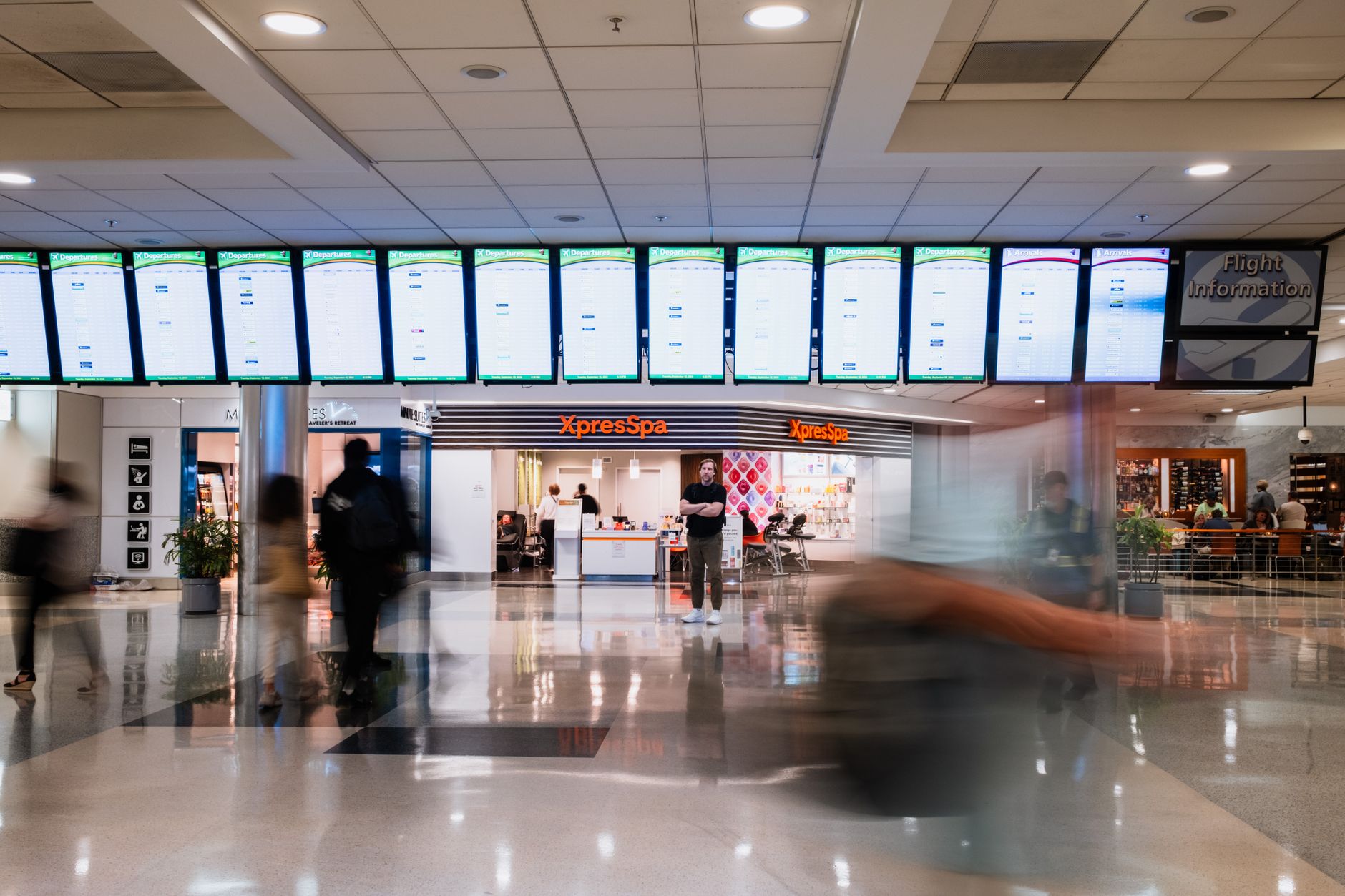
- Screenshot the departure board showing your original scheduled time and the updated status, with a timestamp visible on your phone.
- Request written confirmation of the delay reason from the gate agent; a verbal explanation is not enough for a formal claim.
- Keep every receipt from meals, ground transportation, or hotel stays incurred because of the disruption.
- Save your boarding pass and any rebooking confirmation separately from your email inbox, which can be difficult to search under pressure later.
- If the airline offers a voucher in lieu of a cash refund, note the amount, decline if you prefer the cash refund you are owed, and document that you declined.[1]
Weather documentation deserves particular attention at OKC. If the airline is citing weather as the cause, you have every right to verify that independently. National Weather Service records are public; the airport's official delay logs are retrievable. Carriers sometimes apply a weather label to delays that are partly or primarily operational. That distinction can matter when you are deciding whether to accept an explanation or push back through a formal dispute.
Who Faces the Largest Recovery Gap at Will Rogers World Airport
Business travelers carrying nonrefundable fares and booked on tight connection windows typically face the steepest losses, since a single delay can cascade into missed meetings, hotel charges, and rebooking costs that far exceed the original ticket price. Leisure travelers, particularly families traveling with children during peak holiday windows, often absorb losses quietly because the process of filing feels opaque. The DOT rules detailed in the Providence delay playbook apply at every U.S. airport, OKC included, and the process is more accessible than most travelers assume once it is laid out step by step.
Oklahoma consumer protection law adds a supplemental layer of accountability when an airline or insurer mishandles a claim. The 2026 U.S. Travel Insurance Claim Denial Index documents the patterns in how and why claims are rejected, and those patterns repeat at regional airports just as reliably as at major hubs.
Filing Your OKC Delay Claim Is a Process, Not a Petition
The framing matters here. A refund claim under the DOT's 2024 automatic refund rule is not a favor you are requesting from the airline; it is a right you are exercising.[1] Approaching it that way changes the tone of every communication you send and every response you evaluate. Start with the airline's formal customer service channel, in writing, and reference the DOT rule explicitly. Verbal conversations at the gate or over a phone line are useful for immediate relief but rarely produce documented outcomes.
For Southwest departures from Will Rogers World Airport, the customer service plan is the first document to cite when your delay was carrier-controlled.[3] State plainly what you experienced, when it occurred, what the airline offered, and what you are owed. Attach every receipt and screenshot you gathered at the airport. Keep your language factual and specific, not frustrated in tone, since a clean paper trail accelerates review.
If the airline does not respond within a reasonable window, or responds by offering a voucher where a cash refund is owed, your next move is a DOT complaint through the Aviation Consumer Protection Division.[1] That complaint creates a formal record and triggers a response requirement. Oklahoma Insurance Department oversight becomes relevant when a travel insurance component is involved and the insurer's denial appears inconsistent with your policy terms.[2] You can use the flight delay compensation calculator to organize what you are owed before you send anything.
Travelers who find the process stalls, particularly when documentation is incomplete or a denial arrives without a clear explanation, have a stronger option than persistence alone. RecoverAir's flight recovery service takes on the administrative and legal work of pursuing what you are owed, including appeals of improperly denied refund claims. The service is built specifically for the situations where a traveler knows something went wrong but cannot get the airline to move.
What You Can Actually Recover Beyond the Ticket Price
The base refund covers your fare, but the consequential losses from an OKC delay often exceed it. Hotel rooms charged because an overnight became necessary, ground transportation to reach an alternative airport or a rebooked connection, and meals during an extended wait are all recoverable when the delay was carrier-controlled and you have receipts.[3] Travel insurance, where applicable, may extend that coverage to trip interruption losses that fall outside what the airline owes directly. The patterns in how those insurance claims get denied are worth understanding before you file; the carrier-controlled versus weather framework examined in the Buffalo connection piece applies directly to the same distinctions OKC travelers face.
A delay at Will Rogers World Airport rarely stays simple. What begins as a gate announcement ripples outward into costs and lost time that accumulate quietly until someone adds them up. Federal rights exist to make the traveler whole; the work is knowing how to use them, and knowing when to hand that work to someone who does it every day.
Sources and references
- U.S. DOT Final Rule on automatic refunds
- Southwest customer service plan