When you're racing through terminals and miss your Denver missed connection compensation due to an airline delay, you're not just entitled to a seat on the next flight, you may be owed meal vouchers, hotel accommodations, and in some cases cash compensation. Yet most travelers departing Denver International Airport (DEN) accept a simple rebooking without understanding their full recovery rights. The difference between what airlines volunteer and what you're actually owed can mean hundreds of dollars and hours of unnecessary stress.
Our claims-recovery team sees the same pattern repeated at DEN every week: an inbound delay cascades into a missed connection, gate agents offer minimal assistance, and travelers assume that's the end of the conversation. It rarely is. Understanding the mechanics of missed-connection recovery, and the specific obligations carriers face under U.S. Department of Transportation rules, turns a travel disruption into a manageable inconvenience with fair compensation attached.
The Anatomy of a DEN Missed Connection
Denver International sits at 5,431 feet of elevation across 53 square miles, making it North America's largest airport by land area and the third-busiest by passenger traffic. That scale creates inherent connection vulnerabilities. United Airlines operates DEN as a major hub with more than 400 daily departures, while Southwest and Frontier maintain significant presences. When weather systems move across the Front Range or operational issues ripple through hub operations, tight connection windows evaporate quickly.
The Transportation Security Administration's checkpoint wait times at DEN average 15-20 minutes during standard travel periods but can exceed 45 minutes during peak hours. Concourse transfers via the underground train system add another 8-12 minutes between the most distant gates. These timing realities mean that an inbound delay of just 30 minutes can eliminate a connection buffer that appeared adequate when you booked.
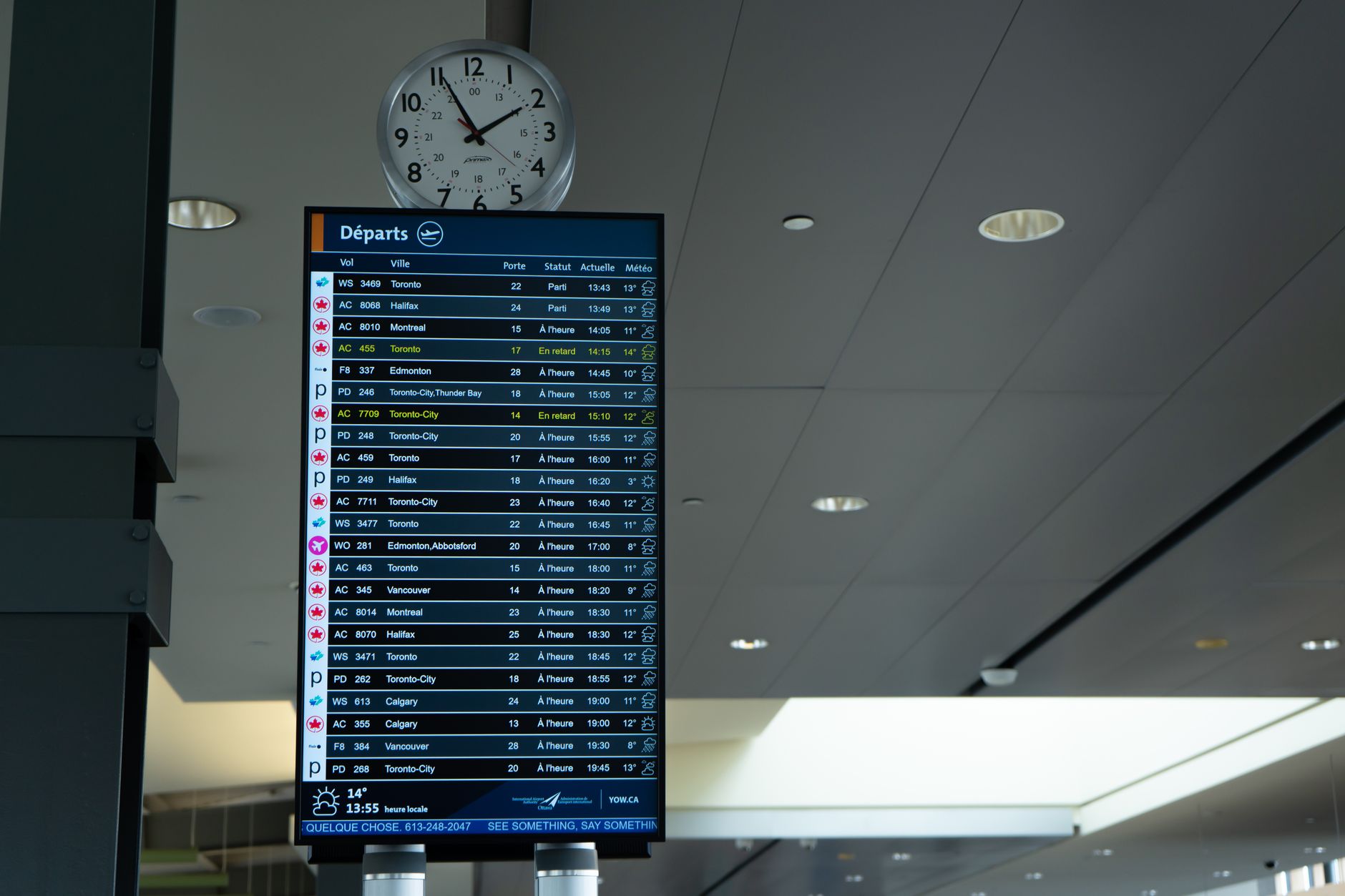
Most consequentially, the cause of your inbound delay determines your compensation entitlements. Mechanical issues, crew scheduling problems, and operational decisions fall squarely within airline control. Weather, air-traffic-control directives, and extraordinary circumstances generally do not. That distinction drives everything that follows in the recovery process.
How Much Compensation Am I Owed for Missed Connection at Denver?
U.S. regulations do not mandate fixed cash payments for missed connections the way EU 261/2004 does for European flights. Instead, the U.S. Department of Transportation requires airlines to rebook you on the next available flight at no additional charge when the missed connection results from a delay on a flight operated by that carrier[1]. That's your baseline entitlement, but it's far from the ceiling.
When the delay keeping you overnight is caused by factors within the airline's control, carriers must provide hotel accommodations and ground transportation to that hotel. Meal vouchers are standard when delays exceed 3-4 hours, though the specific threshold varies by carrier. United's customer-service plan explicitly commits to these amenities for controllable delays; Frontier and Southwest maintain similar policies with slight variations in language and coverage amounts.
Beyond these operational recoveries, our claims-recovery team routinely secures goodwill compensation in the form of miles, vouchers, or statement credits ranging from $200 to $600 for DEN missed connection scenarios. The size of the recovery correlates with delay duration, the inconvenience imposed (especially missed events or truncated vacations), and whether the airline met its stated service commitments. Documentation strength and claim presentation significantly influence outcomes.
If you held a non-refundable ticket and choose not to complete your journey due to the delay, you may be entitled to a full refund under the DOT's August 2024 automatic-refund rule when the delay meets specific thresholds[1]. Our flight delay compensation calculator helps quantify these entitlements based on your specific circumstances.
Cash Compensation vs Service Recovery
Airlines prefer operational recovery, rebooking, meals, hotels, over cash outlays, and their internal systems are built to facilitate those in-kind solutions first. There's nothing inherently wrong with accepting a hotel voucher and meal credit when those meet your needs. Problems arise when the airline fails to provide promised amenities, when the delay causes you to incur expenses the carrier should have covered, or when the disruption creates losses that rebooking alone cannot remedy.
Travelers who miss pre-paid hotel nights, event tickets, or tour reservations due to airline-caused missed connections often have viable claims for consequential damages. Success rates depend heavily on whether you notified the airline of these time-sensitive commitments when booking (or immediately upon delay), whether you purchased travel insurance that might cover certain losses, and how clearly you can document both the expense and the causal connection to the delay.
How Do I File a Missed Connection Claim From Denver?
The claims process begins at the airport, even though you're unlikely to receive final resolution there. When you realize your connection is unrecoverable, proceed directly to your airline's customer-service desk, not the gate agent, who has limited authority and tools. Request rebooking on the next available flight and explicitly ask about meal vouchers and hotel accommodations if the delay extends beyond 3 hours or overnight respectively.
Document everything in real time. Photograph departure boards showing your inbound flight's delay reason and magnitude. Save boarding passes for both segments. If the airline provides meal or hotel vouchers, keep those receipts. If the airline fails to provide vouchers and you incur expenses, retain those receipts with particular care, they become the foundation of your reimbursement claim. The TravelWise Tech Editorial team emphasizes that same-day documentation is exponentially more persuasive than reconstructed timelines assembled weeks later.
Within 24-48 hours of your disruption, file a formal complaint through the airline's website or app. United processes DEN claims through its "Refunds and compensation" portal; Southwest uses its "Customer Relations" system; Frontier directs claims to its Customer Relations department via web form. Include your confirmation number, flight details, a concise narrative of the delay, and copies of all receipts for expenses you're claiming. State clearly what you're requesting: reimbursement for specific expenses, travel vouchers, mileage credits, or other remedies.
Airlines typically respond to initial claims within 7-14 days, though responses often take the form of pro-forma acknowledgments rather than substantive decisions. If your first response is a denial or an offer you consider inadequate, escalate by referencing the carrier's Customer Service Plan (a DOT-required document that outlines service commitments) and any contract-of-carriage provisions that support your position. Persistence matters: second and third communications often yield improved offers as claims move to representatives with greater settlement authority.
When to Involve Third-Party Recovery Services
Complex claims, those involving multiple carriers, international connections, consequential damages, or disputed delay causes, benefit from professional advocacy. Our RecoverAir service assesses missed-connection claims at no upfront cost and pursues recovery on a contingency basis, meaning we're compensated only when you receive a settlement. For straightforward rebooking-and-voucher scenarios, self-service filing is usually sufficient. When airlines deny valid claims or when the potential recovery exceeds $500, professional representation typically increases both the likelihood and size of successful outcomes.
What Are My Colorado Traveler Rights?
Colorado does not maintain aviation-specific consumer-protection statutes beyond the federal baseline established by DOT regulations. The state's Consumer Protection Act prohibits deceptive trade practices generally, but its application to airline service has been preempted by the Airline Deregulation Act in most contexts. This means your missed-connection rights at DEN are functionally identical to those at any other U.S. airport, federal law governs, and state law provides minimal additional protection.
That said, Colorado residents have access to the state's consumer-protection office for assistance with complaint escalation when airlines are unresponsive. While the office cannot compel airlines to pay specific compensation, formal complaints filed with state authorities create public records that airlines prefer to resolve. Coordination between state agencies and the DOT's Aviation Consumer Protection Division sometimes accelerates claim resolution for persistently ignored cases.
Colorado travelers who purchased travel insurance from a carrier licensed in the state have recourse through the Colorado Division of Insurance when claims are improperly denied[2]. Insurance policies frequently cover missed connections due to covered delay reasons, though policy language varies dramatically between carriers. Our sibling article on why most Denver travel-insurance denials are reversible details the policy-review process and escalation strategies.
Carrier-Controlled Delays vs Weather Events
The single most important factor in determining your compensation entitlements is whether the delay causing your missed connection was within the airline's control. The distinction seems straightforward in theory but becomes murky in practice. Mechanical issues, crew scheduling failures, and aircraft-availability problems are controllable. Thunderstorms, blizzards, and air-traffic-control ground stops are not. The challenge arises in the vast middle ground where multiple factors interact.
An aircraft arrives late at DEN due to weather in its previous city, causing a crew to time out under FAA duty-hour regulations, which delays your inbound flight, which causes your missed connection. Is that weather-related or operational? Airlines routinely classify such cascading scenarios as weather events to avoid compensation obligations. Your leverage lies in demonstrating that alternative crews or aircraft were available, that the airline's initial scheduling created insufficient buffers, or that other carriers maintained operations during the same weather window.
Flight-tracking services like FlightAware and FlightRadar24 provide historical data showing which flights departed during the timeframe when yours was delayed. If multiple competitors operated normally while your carrier grounded flights, that suggests an operational rather than weather-driven decision. The National Weather Service's Aviation Weather Center archives weather conditions at specific airports during specific timeframes, creating an objective record you can reference in claim appeals.
Similar dynamics play out with air-traffic-control delays. The FAA occasionally issues ground stops or miles-in-trail restrictions that affect all carriers equally, those are genuinely extraordinary circumstances outside airline control. More commonly, ATC delays result from congestion created by airline scheduling practices (too many flights banking at the same time) or from individual aircraft needing extra spacing due to maintenance or operational issues. Context determines classification, and classification determines compensation.
The Documentation That Wins Disputed Claims
When airlines contest the controllability of a delay, your documentation becomes decisive. The departure board showing delay reason, your boarding pass, and the timestamp on your baggage-claim receipts establish the basic timeline. Adding screenshots of flight-tracking data, weather reports, and other carriers' on-time performance during the same window builds a circumstantial case that operational factors, not weather, drove the delay.
Gate agents and customer-service representatives sometimes make statements, "This delay is due to a maintenance issue," or "We're waiting for a crew", that contradict the airline's later characterization of the event as weather-related. If you or fellow passengers captured such statements on smartphone recordings, those recordings can be extraordinarily persuasive, though always confirm you're in a one-party-consent state (Colorado is) before recording conversations.
How Long Do I Have to File a Missed Connection Claim?
No federal regulation establishes a hard deadline for filing airline service complaints, but practical limitations abound. Most airlines' contracts of carriage require damage claims (including compensation requests) within 21 to 45 days of the incident. United's contract specifies 45 days for domestic claims, while Frontier and Southwest use similar windows. Missing these carrier-imposed deadlines provides airlines with a procedural basis to deny claims without addressing their merits.
The DOT accepts consumer complaints about airline service at any time, and there's strategic value in filing a DOT complaint even months after an incident if the airline has been unresponsive to your direct claim. DOT complaints require airline responses within 60 days, and carriers maintain performance metrics based on complaint rates and resolution times. A formal DOT complaint often unsticks claims that have languished in internal airline queues.
Credit-card dispute rights (chargebacks) typically extend 60 to 120 days from the transaction date or expected service date, depending on the card network and bank. When an airline fails to provide the transportation you purchased, for example, if you abandoned your journey due to a missed connection and the carrier refuses a refund, a chargeback may be appropriate. That said, credit card travel benefit claims should be a last resort after exhausting airline-complaint channels, as they can affect your relationship with the carrier and may result in revoked loyalty-program memberships.
For travelers who purchased trip-interruption or travel-delay insurance, policy-specific deadlines govern. Most policies require notice "as soon as reasonably possible" and formal claim submissions within 20 to 90 days. These deadlines are contractual obligations, and insurers routinely deny claims filed after expiration regardless of merit. Calendar the deadline immediately upon disruption to ensure compliance.
What Does the Airline Owe Me for Missed Connection at DEN?
At minimum, the airline that operated your delayed inbound flight owes you rebooking on the next available flight to your destination at no additional charge. "Next available" includes flights operated by partner airlines when your original carrier lacks sufficient inventory, though getting airlines to book you on competitors requires explicit requests and sometimes escalation. The DOT considers this rebooking obligation foundational, it applies regardless of delay cause, ticket class, or fare type.
When the missed connection results from a controllable delay and extends your journey overnight, you're entitled to hotel accommodations and transportation to that hotel under most carriers' Customer Service Plans. The quality and location of provided hotels vary, and airlines sometimes offer only airport-area properties when downtown options would be more appropriate given the delay duration. If the provided hotel is materially substandard or you have specific accessibility needs the airline's option cannot meet, you can book your own accommodation and submit a reimbursement claim, though pre-approval through a supervisor increases success likelihood.
Meal provisions typically kick in around the 3-hour delay threshold for controllable delays. Voucher amounts range from $12 for snacks to $50 for full meals depending on carrier, delay duration, and time of day. These amounts rarely cover actual airport-restaurant costs at DEN, where average entrée prices exceed $18. Keep receipts for food expenses beyond voucher amounts; while airlines aren't obligated to cover the difference, goodwill settlements sometimes include reasonable meal reimbursements when delays extend 6+ hours.
Our missed connection compensation guide details the full spectrum of potential recoveries, including goodwill compensation, refunds for unused ticket segments, and reimbursement for consequential expenses. The TravelWise Tech Editorial team emphasizes that what airlines initially volunteer often represents a floor, not a ceiling, for entitled compensation.
Special Considerations for Connecting on Separate Tickets
Travelers who book connecting flights on separate reservations, a common cost-saving strategy, face materially different obligations and protections. When your inbound and outbound flights are on a single ticket issued by one airline or marketing partners, the carrier must rebook you at no charge if the first flight's delay causes a missed connection. When you've booked separate tickets, the airline operating your second flight treats you as a no-show with no rebooking obligation and potential fees for any ticket change or rebooking.
This risk is particularly acute at DEN, where ultra-low-cost carrier Frontier maintains significant operations that travelers sometimes pair with inbound flights on United or Southwest. A 2-hour delay on your United arrival can strand you with a worthless Frontier ticket and full change fees for rebooking. Some travel credit cards offer "trip delay" benefits that reimburse these costs when the delay meets specific thresholds, typically 6 to 12 hours. Understanding these protections before booking separate tickets prevents nasty surprises at the airport.
The RecoverAir Advantage for DEN Missed Connections
Navigating airline-compensation systems while managing the stress of a disrupted journey creates a perfect storm of cognitive overload. You're tired, possibly in an unfamiliar city overnight, and making decisions under pressure with incomplete information. Airlines know this and structure their service-recovery systems to encourage acceptance of minimal assistance rather than full compensation.
Our claims-recovery team specializes in post-disruption advocacy when you're home, rested, and able to pursue claims methodically. We reconstruct delay timelines using historical flight data, assess controllability using weather archives and operational records, quantify your full entitlements under applicable regulations and carrier commitments, and pursue recovery through structured escalation protocols refined across thousands of claims. The RecoverAir flights service handles the entire process from initial assessment through final settlement, ensuring no recovery opportunity is overlooked due to procedural complexity or claim-fatigue.
For straightforward missed connections where the airline provided a reasonable rebooking and you incurred minimal additional expense, self-service filing captures most available recovery. When delays exceed 8 hours, when airlines deny hotel coverage for apparently controllable delays, when you've incurred significant consequential expenses, or when your claim involves multiple carriers or international segments, professional advocacy typically increases recovery by multiples that far exceed service fees.
Connecting the Dots on DEN Connection Recovery
A Denver missed connection refund or compensation claim succeeds when you understand your baseline entitlements, document the disruption contemporaneously, file claims within carrier deadlines, and persist through initial denials to secure fair recovery. The variables that determine outcomes, delay cause, carrier policies, documentation quality, claim presentation, are largely within your control when you know which levers to pull.
Denver International's role as a major connection hub for United, Southwest, and Frontier means disruptions here affect thousands of travelers daily. Most accept minimal assistance because they don't realize alternatives exist. The travelers who secure hotel reimbursements, goodwill vouchers, and consequential-damage payments aren't lucky, they're informed and systematic about asserting their rights.
Whether you pursue recovery independently using our travel claims tools or engage professional advocacy through RecoverAir, the underlying principle remains constant: airlines owe more than they volunteer, and knowing the difference turns a frustrating disruption into a fairly compensated inconvenience. Related guidance on Denver flight delay compensation and Charlotte connection recovery strategies provides additional context for understanding carrier-specific policies and geographic variables that influence claim outcomes.
Sources
- U.S. Department of Transportation, "Final Rule on Automatic Refunds for Cancelled or Significantly Changed Flights," 89 FR 48528 (August 2024)
- Colorado Division of Insurance, "Annual Report on Consumer Complaints and Market Conduct" (2023)
Frequently asked questions
How much compensation am I owed for missed connection at Denver?
U.S. regulations do not mandate fixed cash payments for missed connections the way European rules do. Airlines must rebook you on the next available flight at no charge when the missed connection results from their delay. For controllable delays causing overnight stays, carriers must provide hotel accommodations and ground transportation. Meal vouchers are standard when delays exceed three to four hours. Beyond these basics, claims teams routinely secure goodwill compensation in miles, vouchers, or statement credits ranging from $200 to $600 for Denver missed connection scenarios, depending on delay duration, inconvenience level, and documentation strength. Recovery size correlates with how well you document and present your claim.
How do I file a missed connection claim from Denver?
Start at the airport by visiting the airline's customer service desk, not the gate agent. Request rebooking and explicitly ask about meal vouchers and hotel accommodations if delays exceed three hours or overnight. Document everything in real time: photograph departure boards showing delay reasons, save all boarding passes, and keep receipts for any expenses. Within 24 to 48 hours, file a formal complaint through the airline's website. United uses its Refunds and compensation portal, Southwest uses Customer Relations, and Frontier directs claims via web form. Include confirmation numbers, flight details, a concise narrative, and copies of all receipts. State clearly what you're requesting.
What are my Colorado traveler rights?
Colorado does not maintain aviation-specific consumer protection statutes beyond federal baseline established by DOT regulations. Your missed connection rights at Denver International are functionally identical to those at any U.S. airport, as federal law governs and state law provides minimal additional protection. Colorado residents can access the state's consumer protection office for complaint escalation assistance when airlines are unresponsive, though the office cannot compel specific compensation. Colorado travelers who purchased travel insurance from a state-licensed carrier have recourse through the Colorado Division of Insurance when claims are improperly denied. Policy language varies dramatically between carriers.
How long do I have to file a missed connection claim?
This is covered in the article body. The free eligibility check at /recoverair gives a personalized assessment for your situation.
What does the airline owe me for missed connection at DEN?
Airlines must rebook you on the next available flight at no additional charge when the missed connection results from their delay. For delays within airline control causing overnight stays, carriers must provide hotel accommodations and ground transportation to that hotel. Meal vouchers are standard when delays exceed three to four hours, though specific thresholds vary by carrier. United's customer service plan explicitly commits to these amenities for controllable delays, with Frontier and Southwest maintaining similar policies. If you held a non-refundable ticket and choose not to complete your journey, you may be entitled to a full refund under the August 2024 automatic refund rule when delay meets specific thresholds.
Sources and references
- U.S. DOT Final Rule on automatic refunds