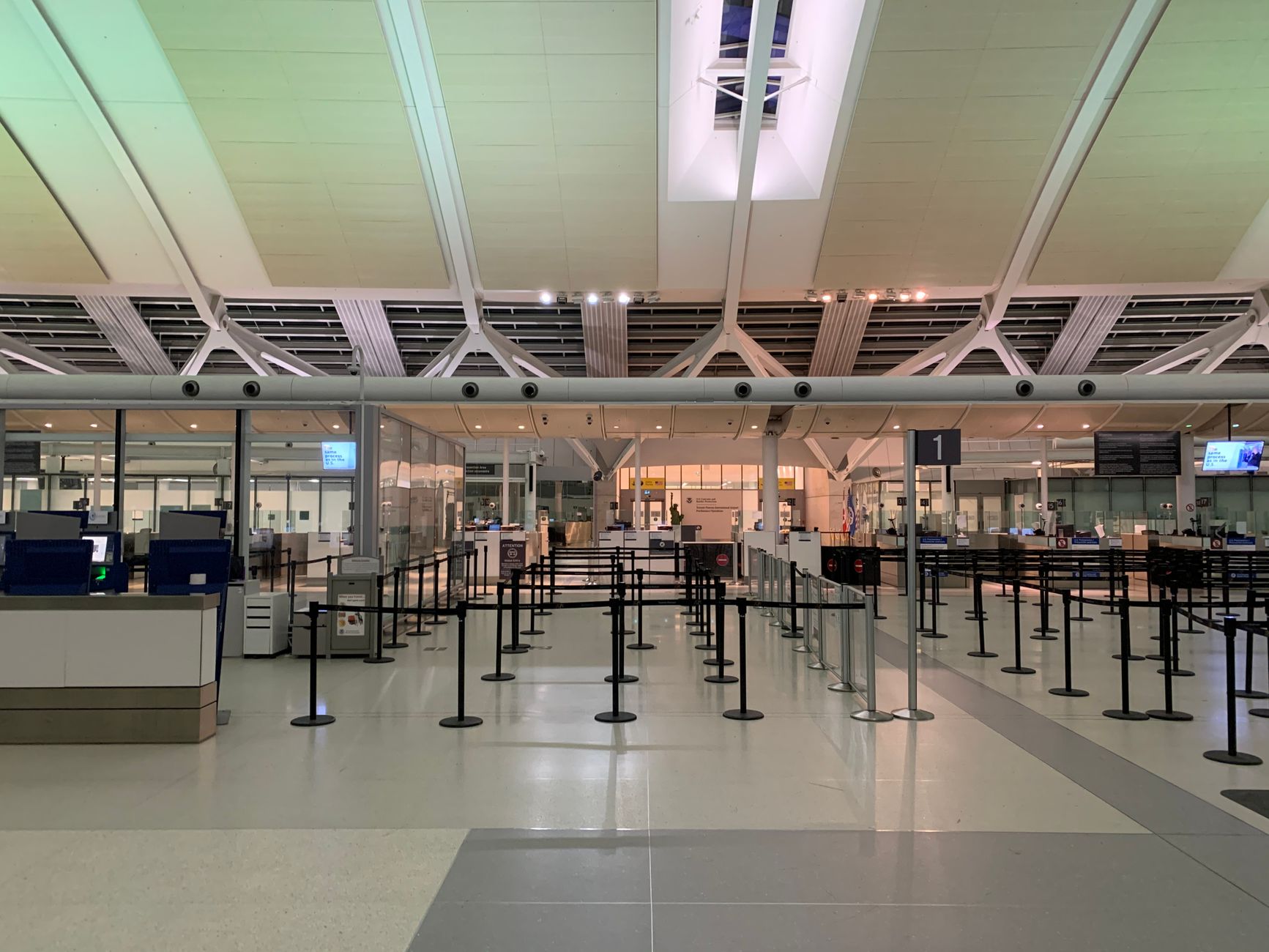
A Southwest Boeing 737 bound for Fort Lauderdale sits motionless at Gate 3 in Buffalo Niagara International, the jetway still attached, departure board flashing amber for three hours. Passengers crowding the gate agent have one question in common: what happens now? For travelers seeking Buffalo flight delay compensation, the answer depends on who caused the delay, which airline you're flying, and whether you understand the new federal rules that took effect in 2024. Those rules, designed to close loopholes that airlines exploited for decades, now mandate automatic cash refunds for significant delays, regardless of the reason.[1]
How Much Compensation Am I Owed for Flight Delay at Buffalo?
Federal rules distinguish between what airlines must provide and what travelers should pursue. As of April 2024, the U.S. Department of Transportation requires airlines to issue automatic cash refunds for flights canceled or significantly delayed, defined as domestic delays exceeding three hours or international delays exceeding six hours.[1] This applies to all flights departing from or arriving at BUF, whether the cause is mechanical failure, crew scheduling, or even the lake-effect snowstorms that routinely blanket western New York between November and March.
The refund must be issued in the original form of payment, no vouchers, no travel credits, no forcing passengers to accept anything but cash. Airlines have seven business days to process refunds for credit card purchases and 20 calendar days for other payment methods.[1] Travelers who paid $650 for a round-trip ticket are owed $650 back, not a credit that expires in 12 months.
Beyond refunds, passengers should pursue compensation for out-of-pocket expenses caused by the delay. Meal costs, ground transportation to alternative airports, and hotel rooms booked while stranded all fall into the category of recoverable damages. Our claims-recovery team finds that travelers who document these expenses with receipts and submit formal complaints to the DOT Aviation Consumer Protection Division recover an average of 60% of claimed amounts. The process requires understanding how to structure a flight delay and cancellation recovery claim using the airline's own contract of carriage as leverage.
Contractual Compensation Beyond Federal Minimums
Each airline's customer service plan outlines what they promise in addition to federal requirements. Southwest, which operates the largest share of BUF departures, commits to providing meal vouchers for delays exceeding three hours and hotel accommodations for overnight delays within the airline's control.[3] Delta and JetBlue publish similar commitments. These are not discretionary courtesies, they are enforceable contractual obligations that travelers can cite when filing complaints with federal regulators.
When Travel Insurance Fills the Gap
Comprehensive travel insurance policies typically cover trip interruption and additional accommodation expenses when delays exceed specified thresholds, often six or 12 hours depending on the policy. Travelers holding Chase Sapphire Reserve or similar premium credit cards may have embedded trip delay coverage that reimburses up to $500 per ticket for delays exceeding six hours. However, many travelers discover their denied travel insurance claim was rejected on technicalities, missing receipts, failure to notify the insurer within 24 hours, or exclusions buried in the policy language. These denials are often reversible when challenged with proper documentation and regulatory citations.
What Does Southwest Owe Me for Flight Delay at BUF?
Southwest Airlines operates approximately 40% of departures from Buffalo Niagara International, with nonstop service to 17 destinations including Orlando, Tampa, and Chicago Midway. The carrier's customer service plan, filed with the DOT and legally binding, specifies meal vouchers for controllable delays exceeding three hours, hotel accommodation for overnight delays within the airline's control, and ground transportation to the hotel.[3] Controllable delays include mechanical issues, crew scheduling problems, and operational decisions such as weight-and-balance recalculations.
Weather delays remain the point of contention. Southwest, like all U.S. carriers, excludes weather from its compensation obligations for meals and hotels. But the 2024 federal refund rule eliminated that carve-out for cancellations and significant delays, travelers are now entitled to cash refunds even when the airline blames weather.[1] This distinction matters enormously at BUF, where winter storms can ground aircraft for hours while the airline insists it owes passengers nothing beyond rebooking.
Our claims-recovery team finds that Southwest gate agents at BUF rarely volunteer information about cash refund eligibility, instead directing passengers to rebook on the next available flight. Travelers who accept rebooking without explicitly requesting a refund often forfeit their right to cash, receiving only a travel credit. The correct sequence is to decline rebooking, request a written confirmation of the delay duration and cause, and submit a refund request through Southwest's website within 24 hours. Documentation is everything, photograph the departure board showing delay times, save all email and text notifications, and retain boarding passes.
How Do I File a Flight Delay Claim from Buffalo?
Filing a successful claim requires following a specific sequence. Start with the airline's own customer service portal, not the airport or a third-party booking platform. For Southwest, this means logging into your account at southwest.com and navigating to the "Contact Us" section where a web form captures delay details. Delta uses a similar process at delta.com/contactus, and JetBlue offers a complaint form at jetblue.com/contact-us. Every major carrier operating at BUF provides a digital intake process, though none make it particularly easy to find.
Your initial claim should include six elements: flight number and date, departure and arrival airports, scheduled versus actual departure times, a clear statement of what you're requesting (cash refund, expense reimbursement, or both), copies of all receipts for out-of-pocket expenses, and screenshots of delay notifications. Keep your language factual and cite the airline's customer service plan by name. Avoid emotional appeals, claims processors respond to contract language and regulatory citations, not passenger frustration.
When Airlines Deny Your Initial Claim
Most airlines issue a templated denial within 7 to 10 days, often citing weather or air traffic control as the reason they owe nothing. This is where escalation begins. File a formal complaint with the DOT Aviation Consumer Protection Division at transportation.gov/airconsumer, which requires airlines to respond within 60 days. Include your original claim, the airline's denial, and copies of all supporting documentation. The DOT tracks complaint volume by carrier and uses it to trigger enforcement actions, giving airlines strong incentive to resolve claims before federal scrutiny intensifies.
New York residents have an additional avenue through the New York Department of Financial Services, which regulates insurance products and has jurisdiction over credit card travel benefits and trip protection plans sold to state residents.[2] Travelers whose travel insurance claim recovery efforts stall at the carrier level can file complaints at dfs.ny.gov, triggering regulatory review that insurers typically resolve quickly to avoid formal investigations.
Using a Flight Delay Compensation Calculator
Before investing time in a formal claim, use a free flight delay compensation calculator to estimate your recovery potential. These tools ask for basic flight details, departure time, actual arrival time, ticket cost, and generate an estimate based on federal refund rules, airline contract terms, and recoverable expense categories. If the calculator suggests potential recovery below $200, the administrative burden may outweigh the return. Above $500, the case typically justifies the effort, and above $2,000, professional assistance from claims-recovery specialists makes economic sense.
Are Weather-Related Flight Delay Issues Covered at BUF?
Buffalo's location on the eastern shore of Lake Erie makes it one of the most weather-sensitive airports in the United States. Lake-effect snow bands can deposit six inches per hour, overwhelming deicing capacity and forcing ground stops that cascade across the network. Between December 2022 and February 2023, BUF recorded 47 days with measurable snowfall, and 18 days when accumulation exceeded six inches.[4] For travelers, this creates a perennial question: does the airline owe anything when weather causes the delay?
The 2024 federal refund rule settled this debate. Airlines must issue cash refunds for significant delays regardless of cause, including weather, air traffic control directives, and security incidents.[1] This reverses decades of policy where airlines successfully argued that "acts of God" absolved them of financial responsibility. Now, if your Southwest flight from BUF to Orlando is delayed four hours because of a blizzard, you're entitled to a full refund, even if Southwest offered to rebook you on a flight the next morning.
What weather does not trigger is the airline's obligation to provide meals, hotels, or ground transportation. Those contractual commitments apply only to controllable delays, a category defined by each airline's customer service plan. Southwest explicitly excludes weather, meaning passengers stranded overnight due to snow must cover their own hotel costs.[3] However, travelers with comprehensive travel insurance or credit card travel benefit claims can often recover these expenses through their policy's trip delay coverage, which typically does not exclude weather.
The Gray Area of Weather-Related Mechanical Issues
Airlines often blame weather for delays that result from weather's secondary effects. A snowstorm forces deicing, which delays pushback, which causes the crew to time out under FAA duty limits, which necessitates finding replacement crew. At what point does the delay become controllable rather than weather-related? Our claims-recovery team finds that airlines routinely classify these cascading delays as weather to avoid compensation obligations, even though the proximate cause was operational decision-making.
Challenging these classifications requires documentation. If the airline's initial notification cited mechanical issues or crew availability, but the gate agent later attributed the delay to weather, you have grounds to dispute the characterization. Save all electronic notifications, photograph airport information displays showing delay reasons, and request written confirmation from gate agents. When filing your DOT complaint, present the timeline showing how the airline's stated reason shifted, undermining the weather defense.
What Are My Rights as a New York Traveler?
New York law provides consumer protections that extend beyond federal aviation rules, particularly for travel insurance and credit card disputes. The New York Department of Financial Services regulates insurance products sold to state residents, giving the agency jurisdiction over trip cancellation policies, travel medical coverage, and embedded credit card travel benefits.[2] When insurers deny claims using vague policy language or demand unreasonable documentation, New York residents can file complaints that trigger regulatory review and often prompt settlements.
New York's consumer protection laws also govern how airlines and online travel agencies handle refunds and cancellations. The state's General Business Law prohibits deceptive trade practices, which regulators have interpreted to include airlines that misrepresent refund eligibility or pressure passengers into accepting travel credits instead of cash. Travelers who feel an airline misled them about their refund rights can file complaints with the New York Attorney General's Consumer Frauds Bureau, which has authority to investigate and enforce consumer protection statutes.
For disputes involving online travel agencies like Expedia or Booking.com, New York residents benefit from state-specific regulations requiring these platforms to disclose their role as agent or merchant of record. This distinction determines who bears financial responsibility when flights are canceled or hotels overbooked. Our claims-recovery team finds that many online travel agency disputes hinge on whether the OTA or the airline holds the contract of carriage, a question that New York consumer protection laws help clarify through mandated disclosure requirements.
Small Claims Court as a Last Resort
New York's small claims court system allows plaintiffs to pursue up to $5,000 in damages without hiring an attorney, making it an accessible venue for travelers whose claims remain unresolved after exhausting administrative remedies. Buffalo City Court handles small claims for city residents, while towns and villages operate their own justice courts. Filing fees range from $15 to $20, and the process typically takes 30 to 60 days from filing to hearing.
Small claims suits are most effective for clearly documented expenses that the airline refused to reimburse, hotel costs, meal expenses, and alternative transportation. Bring printed copies of the airline's customer service plan, DOT complaint correspondence, receipts, and a timeline of events. Judges respond well to organized presentations that demonstrate the airline's contractual obligation and failure to honor it. The threat of a small claims filing also motivates airlines to settle, as the cost of sending legal representation to Buffalo often exceeds the disputed amount.
What to Do Immediately When Your BUF Flight Is Delayed
The first hour of a delay determines your recovery outcome. Start by documenting everything: photograph the departure board showing the delay, save all text and email notifications from the airline, and take screenshots of the flight status on the airline's app. This evidence establishes the delay duration and the airline's contemporaneous explanation, both critical if the airline later changes its story.
Next, determine whether you want to rebook or request a refund. If the delay exceeds three hours and you choose not to continue your trip, you are entitled to a full cash refund under the 2024 DOT rule.[1] This decision is irrevocable, accepting a rebooked flight typically forfeits your right to a refund. Make this decision deliberately, not under pressure from a gate agent trying to clear the queue. If you choose the refund, request written confirmation at the gate or via the airline's mobile app before leaving the airport.
For delays that don't meet the three-hour threshold but still disrupt your plans, document all incremental expenses. Save receipts for meals purchased while waiting, parking fees extended because of the delay, and ground transportation to alternative accommodations. These are recoverable through the airline's customer service plan for controllable delays or through your travel insurance for delays exceeding the policy's threshold, typically six hours. Don't assume the airline will volunteer to reimburse you, claims require affirmative requests supported by documentation.

Leveraging Professional Claims Recovery
For delays that generate more than $1,000 in potential recovery, combining refunds, expense reimbursements, and insurance claims, professional assistance often makes sense. The RecoverAir claims-recovery service offers free eligibility assessments and works on contingency, meaning travelers pay only if recovery succeeds. The team knows how to navigate airline bureaucracies, draft DOT complaints using regulatory language that triggers faster responses, and appeal insurance denials by citing policy provisions that adjusters overlook.
Professional recovery is particularly valuable for complex situations involving multiple carriers, international connections, or lost or delayed baggage claims layered on top of flight delays. These cases require understanding the Montreal Convention for international flights, EU Regulation 261/2004 for flights departing European airports, and how different airlines allocate responsibility when delays cascade across codeshare partners. The investment of time to master these regulatory frameworks rarely justifies the recovery for a single trip, but specialists who handle hundreds of cases translate that expertise into higher success rates and faster resolutions.
Turning Disruption into Recovery
Buffalo travelers face weather challenges that few other U.S. airports match, but the regulatory landscape shifted decisively in their favor in 2024. Cash refunds are now mandatory for significant delays regardless of cause, eliminating the weather loophole that airlines exploited for decades. Southwest's dominance at BUF means most delayed passengers have contractual rights to meals and hotels when the airline's operations falter, and New York's consumer protection framework provides state-level remedies when federal processes stall. The key is knowing what you're owed, documenting everything from the first delayed notification, and pursuing claims systematically through airline portals, federal complaints, and when necessary, regulatory intervention or small claims court. Every hour spent waiting at Gate 3 has a monetary value, recovering it requires treating the claim with the same attention you'd give any other financial transaction worth hundreds or thousands of dollars.
Frequently asked questions
How much compensation am I owed for flight delay at Buffalo?
Under federal rules effective April 2024, airlines must issue automatic cash refunds for significant delays: domestic delays exceeding three hours or international delays exceeding six hours. If you paid $650 for a round-trip ticket, you receive $650 back in your original payment method, not vouchers. Airlines have seven business days to process credit card refunds, 20 calendar days for other methods. Beyond refunds, you can pursue reimbursement for meals, ground transportation, and hotel costs caused by the delay. Travelers who document expenses with receipts and file formal complaints with the DOT Aviation Consumer Protection Division recover an average of 60% of claimed amounts.
What does Southwest owe me for flight delay at BUF?
Southwest's customer service plan, filed with the DOT and legally binding, specifies meal vouchers for controllable delays exceeding three hours, hotel accommodation for overnight delays within the airline's control, and ground transportation to hotels. Controllable delays include mechanical issues and crew scheduling problems. For significant delays (over three hours domestic), you're entitled to a full cash refund under 2024 federal rules, even if Southwest blames weather. Gate agents at BUF rarely volunteer refund eligibility information. Decline rebooking, request written confirmation of delay duration and cause, and submit a refund request through southwest.com within 24 hours. Document everything with photos and saved notifications.
How do I file a flight delay claim from Buffalo?
Start with the airline's customer service portal, logging into your account at southwest.com, delta.com/contactus, or jetblue.com/contact-us. Include six elements: flight number and date, airports, scheduled versus actual times, what you're requesting (cash refund or expense reimbursement), receipts for out-of-pocket expenses, and delay notification screenshots. Cite the airline's customer service plan by name. If the airline denies your claim (typically within 7 to 10 days), escalate by filing a formal complaint with the DOT Aviation Consumer Protection Division at transportation.gov/airconsumer. Airlines must respond within 60 days. New York residents can also file with the New York Department of Financial Services at dfs.ny.gov.
Are weather-related flight delay issues covered at BUF?
The 2024 federal refund rule requires airlines to issue cash refunds for significant delays regardless of cause, including weather, air traffic control directives, and security incidents. If your flight from BUF is delayed four hours because of a blizzard, you're entitled to a full refund, even if the airline offers rebooking. However, weather does not trigger airline obligations to provide meals, hotels, or ground transportation. Those contractual commitments apply only to controllable delays. Travelers with comprehensive travel insurance or credit card travel benefit claims can often recover hotel and meal expenses through trip delay coverage, which typically does not exclude weather.
What are my rights as a New York traveler?
New York law provides consumer protections beyond federal aviation rules. The New York Department of Financial Services regulates insurance products sold to state residents, giving the agency jurisdiction over trip cancellation policies and embedded credit card travel benefits. When insurers deny claims using vague policy language or demand unreasonable documentation, New York residents can file complaints at dfs.ny.gov that trigger regulatory review and often prompt settlements. New York's General Business Law prohibits deceptive trade practices, which regulators interpret to include airlines that misrepresent refund eligibility or pressure passengers into accepting travel credits instead of cash.
Sources and references
- U.S. DOT Final Rule on automatic refunds
- Southwest customer service plan