The conventional wisdom is wrong
Every major travel publication writes the same story about international air passenger rights. The narrative goes: Europeans get strong cash compensation under EU 261, Canadians get similar protections under the Air Passenger Protection Regulations, and Americans get next to nothing because the United States has weak federal rules.
That narrative compares the wrong things.
The honest comparison is between the European Union's mandatory minimum and the full American protection stack , federal rules, plus airline voluntary commitments, plus credit card travel benefits, plus travel insurance, plus loyalty program goodwill, plus dispute layers through booking platforms and hotel chains. When the American stack is fully understood and fully claimed, US travelers often recover more than their European counterparts for the same disruption.
Most American travelers don't know this. Most American travelers also don't recover most of what they're entitled to. That gap between what is available and what is claimed is exactly where this guide lives.
This article walks through every layer of compensation available to travelers in five jurisdictions , the United States, the European Union (EU 261), the United Kingdom (UK 261), Canada (APPR), and the broader Caribbean and African markets. It explains how the layers stack, where Americans win, where Europeans win, and what every traveler should claim when something goes wrong.
The stacking math: a real example
A US-based traveler is flying Delta from Atlanta to Madrid. The outbound segment is delayed six hours due to a maintenance issue (airline-controlled). The passenger holds a Chase Sapphire Reserve card and a standard Allianz travel insurance policy. The traveler is a Delta Medallion member.
Here is what is actually owed:
Layer 1 , DOT automatic refund: If the passenger declines the rebooking, the ticket is fully refundable to the original payment method, automatically, within seven business days.
Layer 2 , Delta voluntary customer service plan: Meal voucher, hotel accommodations for overnight, ground transportation to and from the hotel, and rebooking on Delta or partner carriers. Estimated value: $150 to $400.
Layer 3 , Chase Sapphire Reserve trip delay benefit: Up to $500 per ticket reimbursement for expenses incurred during the delay (food, lodging, transportation, toiletries). The card's trigger is six hours or overnight, which this delay meets.
Layer 4 , Allianz Travel Insurance trip delay benefit: $150 to $300 per day for the delay window. Where the insurance applies to expenses not already covered by Delta, the indemnity principle preserves the benefit.
Layer 5 , Delta SkyMiles goodwill miles: A Medallion member who asks the right way typically receives 5,000 to 15,000 miles as goodwill. Cash equivalent: $50 to $150.
Bonus , EU 261: Because the disrupted segment touches EU airspace, the traveler is also eligible for EU 261 compensation. Under Regulation (EC) No 261/2004, a delay of three hours or more on a long-haul flight entitles the passenger to €600 , approximately $650.
Total cash and credits potentially recoverable: $1,070 to $2,850.
The same incident for a European traveler on the same Delta flight, with no premium credit card and a basic European travel insurance policy, typically recovers $650 to $1,000.
This is not unusual. This is the system working as designed for the prepared American traveler. The challenge is that most travelers never claim more than one or two layers.
The United States: a layered ecosystem that rewards expertise
US federal regulation provides strong protections in some categories and intentionally weak ones in others. The Department of Transportation's April 2024 Automatic Refund Rule requires airlines to automatically refund passengers to the original payment method whenever a flight is canceled or significantly changed, regardless of cause. This is one of the strongest refund rights in the world.
Where US federal regulation is weak is in cash compensation for delays themselves. The Biden administration's December 2024 proposed rule that would have created EU 261-style cash compensation of $200 to $775 for controllable delays was formally withdrawn by the Trump administration's DOT on November 17, 2025.
What remains in effect: Automatic cash refunds for cancellations and significant changes. Involuntary denied-boarding compensation of 200% of one-way fare (capped at $1,075) for short delays, 400% (capped at $2,150) for longer delays. Refunds for delayed baggage fees (12 hours domestic, 15 to 30 hours international). The Passenger Rights Summary disclosure rule effective May 26, 2026.
The voluntary commitment layer is essential to understand. Because federal regulation does not mandate cash compensation, US airlines compete for customer loyalty through their published customer service plans. These plans are legally enforceable because the DOT can fine carriers for failing to deliver on commitments they have publicly made.
Major US carriers , Alaska, American, Delta, JetBlue, and United , guarantee free rebooking on the same airline or a partner carrier, meal vouchers, hotel accommodations for overnight delays, and complimentary ground transportation when a controllable delay exceeds three hours. Southwest offers similar protections without partner-airline rebooking. The ultra-low-cost carriers , Spirit, Frontier, and Allegiant , offer dramatically less.
The European Union: high baseline, narrow scope
Europe is the global benchmark for passenger compensation, but the system has limits that American writing about it routinely misses. EU Regulation (EC) No 261/2004 was designed to address a specific market failure: European carriers competing aggressively on price while degrading service quality. The regulation forced them to internalize the cost of disruption.
What EU 261 actually provides:
Cash compensation for cancellations and long delays on flights departing the EU on any carrier, or arriving in the EU on an EU carrier:
- €250 for flights up to 1,500 km
- €400 for flights 1,500 to 3,500 km, or any flight over 1,500 km within the EU
- €600 for flights over 3,500 km
The compensation triggers when the delay exceeds three hours at the final destination and the cause is not an extraordinary circumstance. Air traffic control strikes, certain weather events, and political instability are extraordinary; mechanical issues, crew shortages, and most operational failures are not.
Right to care includes meals, refreshments, two telephone calls or emails, and hotel accommodation plus transport when an overnight stay becomes necessary. There is no monetary cap on right to care, only a reasonableness standard.
Right to refund or rerouting applies whenever the delay exceeds five hours. The passenger chooses between a full refund within seven days or rerouting at the earliest opportunity or at a later date of their choosing.
Where EU 261 falls short, by American standards: the regulation does not require additional cash for trip delays under three hours, does not address baggage delay reimbursement beyond Montreal Convention minimums, and does not interact with private travel insurance in a structured way. European travelers also typically hold less robust credit card travel benefits than their American counterparts.
The United Kingdom: post-Brexit divergence
UK 261, the post-Brexit successor regulation, retains essentially identical compensation structures to EU 261 but applies to flights departing the UK on any carrier, or arriving in the UK on a UK or EU carrier. Compensation amounts are denominated in pounds sterling at near-parity with the euro amounts (£220, £350, £520). Enforcement remains through the Civil Aviation Authority and county court small claims procedures.
For US travelers booking transatlantic itineraries, this means a single disrupted journey can potentially trigger multiple regimes. A New York to Madrid flight on Iberia that is cancelled triggers EU 261. The same flight on Delta triggers DOT automatic refund rule plus EU 261 because the disrupted segment departs an EU member state. The same flight on Virgin Atlantic from London to New York triggers UK 261.
Canada: the closest US analog
Canada's Air Passenger Protection Regulations (APPR), implemented in 2019 under SOR/2019-150, were modeled on EU 261 but with several distinctly Canadian modifications. The compensation tiers track disruption length rather than flight distance, and amounts vary by airline size.
For large carriers (Air Canada, WestJet) flying domestically or to or from Canada:
- Three to six hour delays caused by the airline: CAD $400
- Six to nine hour delays caused by the airline: CAD $700
- Nine plus hour delays caused by the airline: CAD $1,000
Small carriers pay roughly half these amounts. Compensation triggers only when the carrier is responsible for the disruption; weather, security, and air traffic events do not qualify.
APPR also mandates rebooking obligations within nine hours for controllable delays, baggage compensation at Montreal Convention limits, and tarmac delay protections that exceed US standards. A passenger held on a Canadian tarmac for more than three hours has the right to deplane unless takeoff is imminent within 45 minutes.
For US travelers, APPR comes into play any time their Canadian routing experiences disruption. A Toronto to Los Angeles connection delayed five hours on Air Canada is worth CAD $400 under APPR, regardless of whether DOT rules apply on the US leg.
The Caribbean: an underserved market with real rights
Most US travel publications cover the Caribbean as a destination, not as a regulatory environment. That gap creates significant unrecovered compensation for travelers. Every Caribbean nation maintains civil aviation authority oversight that governs passenger rights, and several have signed onto international conventions that strengthen those rights when properly invoked.
The applicable framework is layered. The Montreal Convention of 1999, which most Caribbean nations have ratified, provides baseline international liability standards: roughly $2,200 per passenger for baggage loss, and damages for death or injury without proof of fault up to 128,821 Special Drawing Rights. The treaty applies on any international flight between two ratifying nations, which covers virtually every flight a US traveler takes to or from the Caribbean.
National regulations layer on top. Jamaica's Civil Aviation Authority requires written disclosure of passenger rights at booking and at the airport. The Bahamas operates a Civil Aviation Department with passenger complaint mechanisms. Trinidad and Tobago's civil aviation framework recognizes the Montreal Convention as primary law. Barbados, Antigua and Barbuda, and the Eastern Caribbean states have adopted regional regulatory frameworks under the Caribbean Aviation Safety and Security Oversight System.
What this means practically: a US traveler whose JetBlue flight from Montego Bay is cancelled has DOT automatic refund rights, Montreal Convention liability for any baggage lost or damaged on the international leg, and the right to file a complaint with the Jamaica Civil Aviation Authority alongside any US filing.
The carriers themselves operate under significant complexity. Caribbean Airlines, the regional flag carrier of Trinidad and Tobago, maintains a customer service plan governed by both Caribbean and US law on its US routes. InterCaribbean Airways operates under multiple national jurisdictions. American Airlines' Caribbean network falls under DOT rules on the US-side and Montreal Convention on the international segment. Knowing which framework governs which leg is exactly the kind of expertise that produces actual recovery.
Africa: extraordinary diversity, real legal frameworks
African aviation is often dismissed by US travel writers as unregulated. This is wrong. Most African nations have ratified the Montreal Convention. The African Civil Aviation Commission coordinates passenger rights frameworks across 54 member states. South Africa's Consumer Protection Act provides aggressive consumer remedies that exceed many European standards. Ethiopia's civil aviation authority oversees Ethiopian Airlines, one of the continent's strongest carriers, under regulations that mirror international standards.
For US travelers connecting through African hubs, the meaningful frameworks are:
Montreal Convention liability applies on any international flight to or from an African nation that has ratified the treaty. This includes Ethiopia, Kenya, South Africa, Egypt, Morocco, Tunisia, Nigeria, Ghana, Senegal, and most other commercially significant African nations. The standard liability limits apply: roughly $2,200 per passenger for baggage, and unlimited liability for death or injury with limits on certain damage types.
National passenger rights frameworks vary widely but exist. South African Civil Aviation Authority handles disputes for flights involving South African carriers or South African airports. Kenya Civil Aviation Authority maintains similar oversight. Ethiopian Civil Aviation Authority governs Ethiopian Airlines' operations.
EU 261 applies extraterritorially to any flight departing an EU member state on any carrier, including African carriers. A passenger on a Royal Air Maroc flight from Casablanca to Paris that is cancelled is covered by Montreal Convention plus Moroccan civil aviation law. The same passenger on the return Paris to Casablanca flight is also covered by EU 261. Most travelers, and most travel publications, miss this.
The carriers most US travelers will encounter: Ethiopian Airlines (Africa's largest by fleet and revenue, Star Alliance member, US codeshare with United), Kenya Airways (SkyTeam member, codeshares with Delta), South African Airways (in restructuring but operational), EgyptAir (Star Alliance), Royal Air Maroc (Oneworld), and the regional carriers serving West Africa including Air Senegal, Asky Airlines, and Air Côte d'Ivoire. Each has its own customer service obligations under its national framework plus international convention.
Latin America: a fragmented but improving landscape
Latin American passenger rights vary by country. Brazil's Civil Aviation National Agency (ANAC) operates ANAC Resolution 400, which provides compensation rules broadly modeled on EU 261. Chile maintains aggressive consumer protection through SERNAC, with travel-specific provisions. Argentina's Resolution 1532 governs passenger rights on domestic and international flights operated by Argentine carriers. Colombia, Mexico, and Peru maintain national frameworks of varying strength.
The practical implication for US travelers: a São Paulo to New York flight on Latam that is delayed for over four hours triggers ANAC Resolution 400 protections on the Brazilian side, plus DOT automatic refund obligations on the US side. A Mexico City to Los Angeles flight on Aeroméxico delayed six hours triggers Mexican civil aviation law plus US DOT rules.
The 24-hour playbook: what to do right now
Knowledge of regulations means nothing without action within the disruption window. Compensation claims weaken with every hour that passes between the disruption and the documentation.
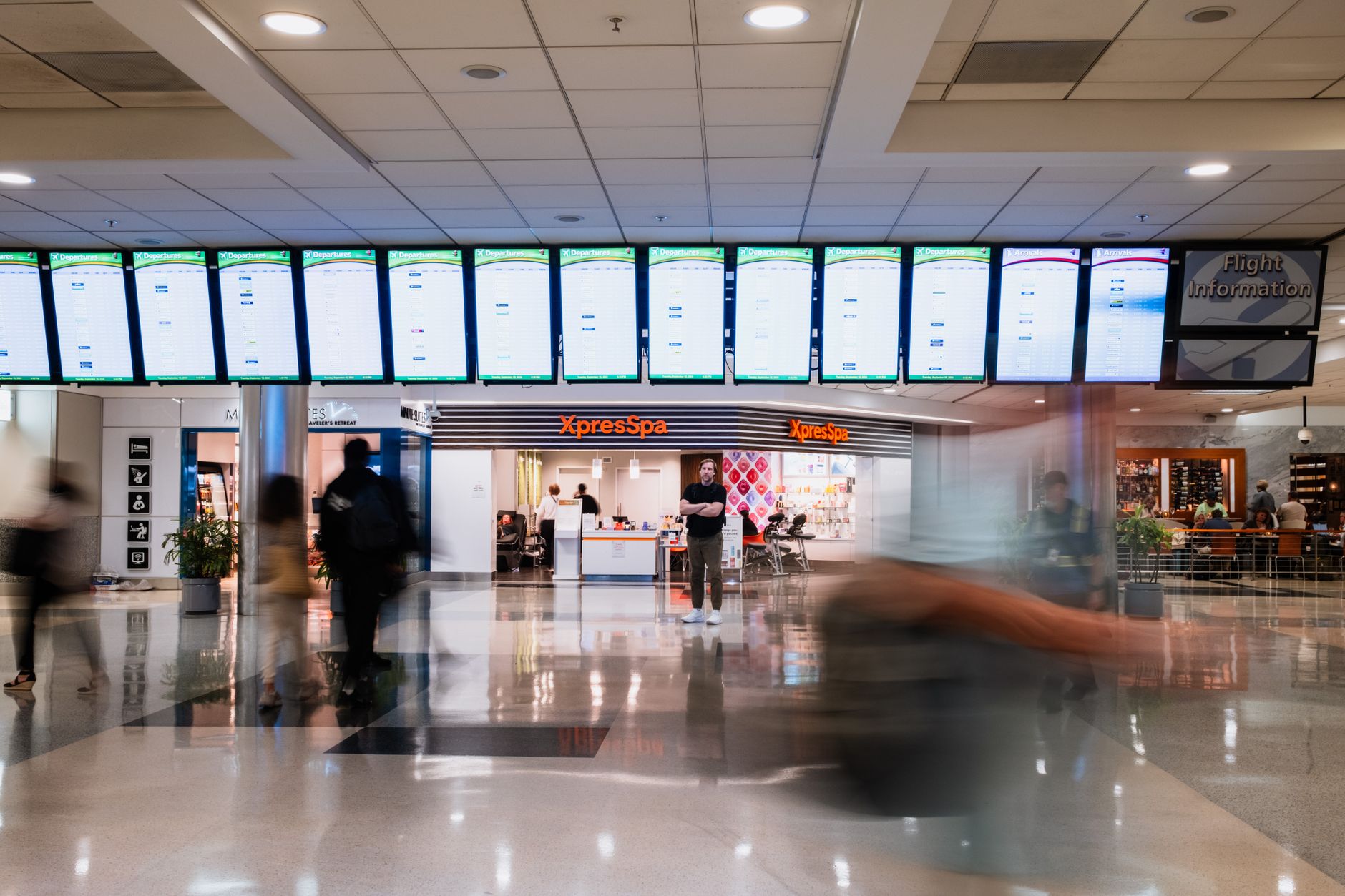
Hour zero, the moment of disruption. Photograph the airport monitor showing the delay or cancellation. Photograph the gate, the boarding pass, and any printed notices. These timestamps and visual confirmations become the foundation of every subsequent claim.
Hour one, the airline encounter. Approach the gate agent or customer service desk and request, in this exact order: confirmation in writing of the disruption cause (controllable versus extraordinary), the alternative arrangements being offered (rebooking, refund, hotel), and the airline's reference number for the disruption. Save everything in writing. Verbal commitments fade.
Hour two through eight, the documentation window. If meals are needed, retain receipts. If hotel becomes necessary, retain receipts. If alternative transportation is required, retain receipts. Every receipt is a future claim line item. Take photos of receipts immediately in case paper copies are lost.
Hour 24, the policy review. Within 24 hours of arriving home or arriving at the alternative destination, pull every applicable policy: trip insurance documents, credit card benefit guides, airline customer service plans, and EU 261 or APPR rights if international. Cross-reference each against the documented disruption. Most claims that fail at this stage fail because the traveler did not realize they had three or four overlapping coverage layers.
Hour 72, the filing deadline. Some travel insurance policies require notice of claim within 72 hours. Credit card benefits typically have 20 to 90 day filing windows. EU 261 claims must be filed within national statute of limitations (six years in the UK, two to three years in most EU states). Filing early preserves every option.
Common questions, answered
What is the difference between EU 261 and US flight compensation rules? EU 261 provides mandatory cash compensation of €250 to €600 for controllable delays exceeding three hours. US federal rules provide automatic refunds for cancellations but no mandatory cash compensation for delays. US travelers can stack voluntary airline plans, credit card benefits, and travel insurance to reach comparable total recovery, but this requires active claiming across multiple parties.
Can a US traveler claim EU 261 compensation on a Delta flight? Yes, on the segment departing an EU member state. A Madrid to New York Delta flight that arrives more than three hours late at JFK triggers EU 261 because the flight departed the EU. The traveler files directly with Delta. Delta cannot waive EU 261 obligations through its Contract of Carriage.
What did the Trump administration change about airline passenger rights in November 2025? On November 17, 2025, the Department of Transportation formally withdrew the Biden-era proposed rule that would have required cash compensation of $200 to $775 for controllable delays. The DOT Automatic Refund Rule for cancellations remained in effect. Voluntary airline customer service plans remained legally binding. Existing protections for involuntary denied boarding, baggage delay refunds, and the May 26, 2026 Passenger Rights Summary disclosure rule continued forward.
How do I stack travel insurance with credit card trip delay benefits? Travel insurance benefits and credit card benefits typically operate under indemnity principles, meaning each pays only for losses not already reimbursed. The practical method is to file with the credit card first (because it usually has the shorter trigger window and faster payout), then file with travel insurance for any expenses not covered by the card. Both insurers will request documentation of what the other paid. Keep all receipts and claim correspondence.
Are Caribbean and African airlines covered by EU 261? Yes, when the flight departs an EU member state. EU 261 applies to all carriers operating from EU airports, regardless of the carrier's country of incorporation. A passenger on Royal Air Maroc departing Madrid is covered. A passenger on Ethiopian Airlines departing Frankfurt is covered. The same passenger on the return flight from Casablanca or Addis Ababa to the EU is covered if the carrier is an EU carrier. African and Caribbean carriers' US-bound flights are covered by DOT rules and Montreal Convention but not EU 261.
The bottom line
The American compensation system is not weak. It is undisclosed. Most US travelers do not know the layers exist, and the airlines, credit card companies, and travel insurers have no incentive to teach them. The result is billions of dollars in unclaimed compensation each year.
For travelers willing to do the work, the math is strongly in favor of the prepared American. The combination of DOT automatic refunds, airline voluntary plans, credit card trip delay benefits, travel insurance, loyalty program goodwill, and credit card chargeback rights routinely produces recoveries that exceed European EU 261 cash compensation for the same disruption.
For travelers who do not want to learn the system, services like RecoverAir exist to handle the recovery on contingency. The cost is a percentage of the recovered amount. The alternative is leaving money on the table.
The world is becoming more turbulent for travelers. Cancellation policies are hardening. Insurance is becoming more restrictive. Carrier reliability is degrading on many routes. The travelers who recover most of what they are owed will be those who understand the system before disruption happens, document carefully during the disruption, and file claims systematically across every applicable layer.
Sources and further reading
- U.S. Department of Transportation, Aviation Consumer Protection Final Rule (April 2024) , automatic refund rule for cancellations and significant changes.
- European Union Regulation (EC) No 261/2004 , air passenger rights for denied boarding, cancellation, and long delays.
- UK Civil Aviation Authority guidance on UK 261 , post-Brexit successor regulation.
- Canada Air Passenger Protection Regulations (SOR/2019-150) , Canadian passenger rights framework.
- Montreal Convention 1999, Article 22 , international baggage liability limits.
- Chase Sapphire Reserve Benefits Guide , trip delay reimbursement terms.
- Allianz Global Assistance policy documents , trip delay benefit structure.
- U.S. Department of Transportation, DOT Cancels Biden-Era Compensation Rule (November 17, 2025).
- Squaremouth Annual Travel Insurance Claims Reports , denial pattern data.
- Jamaica Civil Aviation Authority, passenger rights framework.
- African Civil Aviation Commission, regional coordination on passenger rights.
- ANAC Brazil Resolution 400, passenger rights regulations.
Frequently asked questions
What is the difference between EU 261 and US flight compensation rules?
EU 261 provides mandatory cash compensation of EUR 250 to EUR 600 for controllable delays exceeding three hours. US federal rules provide automatic refunds for cancellations but no mandatory cash compensation for delays. US travelers can stack voluntary airline plans, credit card benefits, and travel insurance to reach comparable total recovery, but this requires active claiming across multiple parties.
Can a US traveler claim EU 261 compensation on a Delta flight?
Yes, on the segment departing an EU member state. A Madrid to New York Delta flight that arrives more than three hours late at JFK triggers EU 261 because the flight departed the EU. The traveler files directly with Delta. Delta cannot waive EU 261 obligations through its Contract of Carriage.
What did Trump change about airline passenger rights in November 2025?
On November 17, 2025, the Department of Transportation formally withdrew the Biden-era proposed rule that would have required cash compensation of $200 to $775 for controllable delays. The DOT Automatic Refund Rule for cancellations remained in effect. Voluntary airline customer service plans remained legally binding. Existing protections for involuntary denied boarding, baggage delay refunds, and the May 26, 2026 Passenger Rights Summary disclosure rule continued forward.
How do I stack travel insurance with credit card trip delay benefits?
Travel insurance benefits and credit card benefits typically operate under indemnity principles, meaning each pays only for losses not already reimbursed. The practical method is to file with the credit card first (because it usually has the shorter trigger window and faster payout), then file with travel insurance for any expenses not covered by the card. Both insurers will request documentation of what the other paid. Keep all receipts and claim correspondence.
Are Caribbean and African airlines covered by EU 261?
Yes, when the flight departs an EU member state. EU 261 applies to all carriers operating from EU airports, regardless of the carriers country of incorporation. A passenger on Royal Air Maroc departing Madrid is covered. A passenger on Ethiopian Airlines departing Frankfurt is covered. The same passenger on the return flight from Casablanca or Addis Ababa to the EU is covered if the carrier is an EU carrier. African and Caribbean carriers US-bound flights are covered by DOT rules and Montreal Convention but not EU 261.
Sources and references
- U.S. DOT Final Rule on automatic refunds (April 2024)
- EU Regulation (EC) No 261/2004
- UK Civil Aviation Authority guidance on UK 261
- Canada Air Passenger Protection Regulations SOR/2019-150
- Montreal Convention Article 22
- Chase Sapphire Reserve trip delay benefit terms
- Allianz Global Assistance trip delay policy
- Squaremouth annual claims report
- U.S. Department of Transportation Aviation Consumer Protection
- FlyersRights.org passenger advocacy data
- U.S. DOT Final Rule on automatic refunds